


Enhancing
Feature Engagement
Enhancing
Feature Engagement
For
For
Usability Testing/
Moderated Remote User Test
Usability Testing/
Moderated Remote User Test
Team
Team
Role
Role
Client
Client
Type
Type
Academic
Academic
+
+
Industry
Industry
Timeline
Timeline
4 UX consultants
4 UX consultants
Research
Research
Recruitment
Recruitment
User testing
User testing
Interaction design
Interaction design
Krush App
Krush App
5 weeks
5 weeks
About Krush
Aims to authentically connect the Asian community and culture, creating an enjoyable social experience that fosters meaningful connections and
a sense of belonging.
Aims to authentically connect the Asian community and culture, creating an enjoyable social experience that fosters meaningful connections and
a sense of belonging.
Brand Mission
Brand Mission
Providing a space where shared culture and values can thrive
Providing a space where shared culture and values can thrive
Bringing together individuals who seek deeper relationships
Bringing together individuals who seek deeper relationships
Helping people feel seen and supported within a like-minded community
Helping people feel seen and supported within a like-minded community

Project Overview
Project Overview
We aimed to provide
actionable insights to
improve usability
and foster deeper connection-building among Gen Z users.
We aimed to provide
actionable insights to
improve usability
and foster deeper connection-building among Gen Z users.
Our research focused on
uncovering how users
discovered,
interacted with,
and interpreted these features,
and why many abandoned them.
Our research focused on
uncovering how users
discovered,
interacted with,
and interpreted these features,
and why many abandoned them.

The goal of this user testing
is to investigate low engagement
with two of its core features:
The goal of this user testing
is to investigate low engagement
with two of its core features:
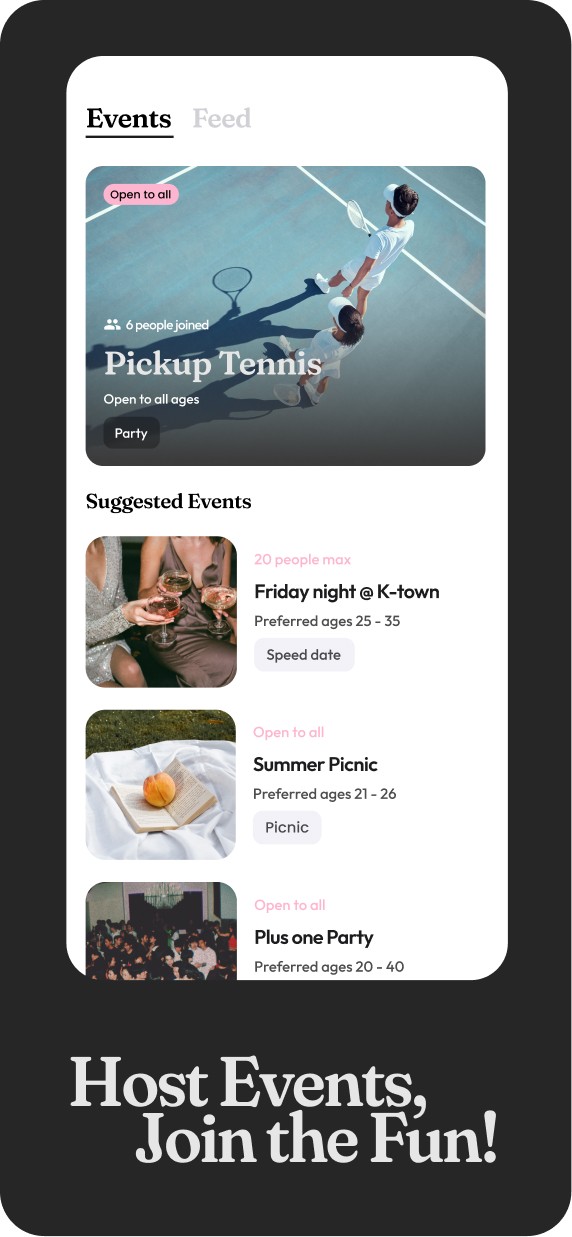
🎉 Events
🎉 Events
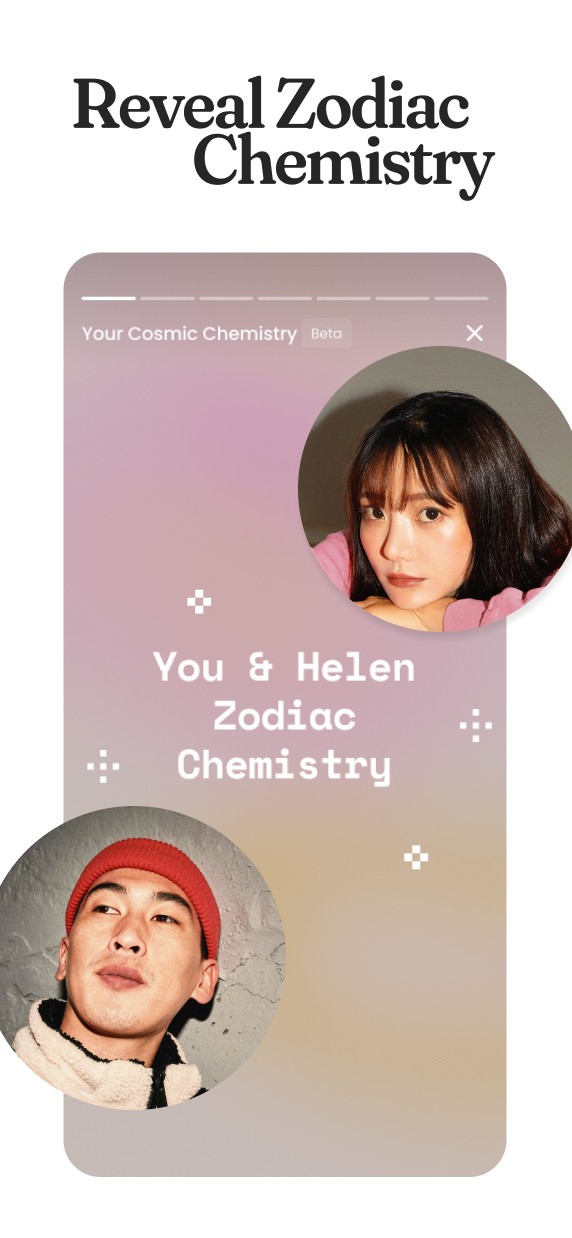
✨ Zodiac Compatibility
✨ Zodiac Compatibility
The Result
Users expected the zodiac feature to appear post-match,
not during profile browsing, because the zodiac report has minimal influence on the matching decision.
They saw it as a tool for deepening a connection,
not filtering potential matches.
Its current flow misalign with their mental model.
Users expected the zodiac feature to appear post-match,
not during profile browsing, because the zodiac report has minimal influence on the matching decision.
They saw it as a tool for deepening a connection,
not filtering potential matches.
Its current flow misalign with their mental model.
Zodiac Compatibility Entry Misalignment
Zodiac Compatibility Entry Misalignment
Finding 1
Finding 1
✨
✨
Users questioned the accuracy of the compatibility score, often dismissing it due to lack of transparency. They were reluctant to spend hearts (in-app currency) on a feature that seemed unrealistic.
Users also express confusions of how would the datas in the report help them further the relationship. They would like to have practical content they could act on.
Users questioned the accuracy of the compatibility score, often dismissing it due to lack of transparency. They were reluctant to spend hearts (in-app currency) on a feature that seemed unrealistic.
Users also express confusions of how would the datas in the report help them further the relationship. They would like to have practical content they could act on.
✨
✨
Credibility and Content Depth of Zodiac Reports
Credibility and Content Depth of Zodiac Reports
Finding 2
Finding 2
Joining an event lacked clarity and feedback.
Users weren’t sure if they had successfully joined, couldn’t find the event later, and were suddenly dropped into inactive group chats without context.
Joining an event lacked clarity and feedback.
Users weren’t sure if they had successfully joined, couldn’t find the event later, and were suddenly dropped into inactive group chats without context.
Disjointed Event Participation Flow
Disjointed Event Participation Flow
Finding 3
Finding 3
🎉
🎉
Users remain silent in the group chat because they are lack of content about the event and attendee.
Users are also uncomfortable to be the first one to start a conversation or break the ice, as a result, no one communicate in the chat.
Users remain silent in the group chat because they are lack of content about the event and attendee.
Users are also uncomfortable to be the first one to start a conversation or break the ice, as a result, no one communicate in the chat.
Inactive Event Group Chat
Inactive Event Group Chat
Finding 4
Finding 4
🎉
🎉
User Testing Process
Post kick-off meeting Evaluation
We leant about Krush’s vision, mission, and values. Also their current business strategy and development plan. After conducting an internal evaluation of their key features within the team, we plan to conduct moderated usability testing focused on the Event and Asian Zodiac features, as they reinforce Krush’s identity around Asian zodiac culture and have strong potential to differentiate the app from its competitors.
Post kick-off meeting Evaluation
We leant about Krush’s vision, mission, and values. Also their current business strategy and development plan. After conducting an internal evaluation of their key features within the team, we plan to conduct moderated usability testing focused on the Event and Asian Zodiac features, as they reinforce Krush’s identity around Asian zodiac culture and have strong potential to differentiate the app from its competitors.
The client aimed for a holistic improvement of the app, extending to the exploration of new feature opportunities.
Conducting a comprehensive, system-wide usability test in just five weeks was clearly an unrealistic task. After internal discussion, we strategically decided to focus on two key areas: the Event Feature and the Asian Zodiac Compatibility Feature, while also gathering broader user perspectives on the Krush community through moderated usability testing.
This focus allowed us to generate more actionable and specific recommendations.
The client aimed for a holistic improvement of the app, extending to the exploration of new feature opportunities.
Conducting a comprehensive, system-wide usability test in just five weeks was clearly an unrealistic task. After internal discussion, we strategically decided to focus on two key areas: the Event Feature and the Asian Zodiac Compatibility Feature, while also gathering broader user perspectives on the Krush community through moderated usability testing.
This focus allowed us to generate more actionable and specific recommendations.
The challenge 1:
Prioritize the key testing areas to establish a clear and focused scope.
The challenge 1:
Prioritize the key testing areas to establish a clear and focused scope.
Recruited suitable participants
We recruited 8 participants from 18-26 which aligned with Krush’s current strategic goal to expand its reach among Gen Z users.
Recruited suitable participants
We recruited 8 participants from 18-26 which aligned with Krush’s current strategic goal to expand its reach among Gen Z users.
Recruiting both new and existing users was difficult due to privacy concerns. Many existing users, especially older ones, were hesitant to join Zoom sessions or share their screens, even after we provided consent forms and clarified the academic purpose. As a result, we shifted our focus to Gen Z users new to the app. Using PanelFox screeners, we selected participants from diverse Asian subcultures and gender identities to align with Krush’s target audience.
Recruiting both new and existing users was difficult due to privacy concerns. Many existing users, especially older ones, were hesitant to join Zoom sessions or share their screens, even after we provided consent forms and clarified the academic purpose. As a result, we shifted our focus to Gen Z users new to the app. Using PanelFox screeners, we selected participants from diverse Asian subcultures and gender identities to align with Krush’s target audience.
The challenge 2:
Shifting Recruitment Strategy to Focus on Target Audiences
The challenge 2:
Shifting Recruitment Strategy to Focus on Target Audiences
Set up the moderated study
The structure of the usability test for Krush was designed to uncover behavioral insights and motivations related to the app’s interactive features.
Set up the moderated study
The structure of the usability test for Krush was designed to uncover behavioral insights and motivations related to the app’s interactive features.
Coordinating moderated remote testing for the mobile app posed logistical challenges, as participants were required to join Zoom on both desktop and mobile, share their mobile screens, and complete a multi-day account approval process beforehand. Despite multiple reminders, some participants were unable to finish registration in time and had to reschedule.
Coordinating moderated remote testing for the mobile app posed logistical challenges, as participants were required to join Zoom on both desktop and mobile, share their mobile screens, and complete a multi-day account approval process beforehand. Despite multiple reminders, some participants were unable to finish registration in time and had to reschedule.
The challenge 3
Logistical Barriers in Conducting Remote Usability Tests
for Mobile Apps
The challenge 3
Logistical Barriers in Conducting Remote Usability Tests
for Mobile Apps
Analyzed findings and recommend design solutions
Results and findings were aggregated to understand user pain points and key usability issues when interacting with this app.
Analyzed findings and recommend design solutions
Results and findings were aggregated to understand user pain points and key usability issues when interacting with this app.
The process from recruitment to analysis was non-linear. As early testing sessions revealed emerging patterns, we iteratively refined the testing script. We also shifted focus toward Gen Z users to better align with the client’s evolving goals. As a result, several phases—recruitment, testing, and analysis—overlapped throughout the process.
The process from recruitment to analysis was non-linear. As early testing sessions revealed emerging patterns, we iteratively refined the testing script. We also shifted focus toward Gen Z users to better align with the client’s evolving goals. As a result, several phases—recruitment, testing, and analysis—overlapped throughout the process.
The challenge 4
Iterative Workflow and Timeline Overlap During User Testing
The challenge 4
Iterative Workflow and Timeline Overlap During User Testing
From Synthesize to Prototype
*The following section will be focusing on
the Zodiac Compatibility Feature
Key Finding 1: Zodiac Feature Mental Model Mismatch
Key Finding 1: Zodiac Feature Mental Model Mismatch
Zodiac Chemistry
Has Minimal Influence on Matching Decision
Zodiac Chemistry
Has Minimal Influence on Matching Decision
I think it’s a fun thing to look at, but I wouldn’t base a match on it.
I think it’s a fun thing to look at, but I wouldn’t base a match on it.
6/8 participants found the feature interesting
6/8 participants found the feature interesting
100% express that they wouldn’t spend a heart on this feature before matched
100% express that they wouldn’t spend a heart on this feature before matched
100% said it would not affect their decision to match
100% said it would not affect their decision to match
It’s something I’d only care about after chatting for a bit.
It’s something I’d only care about after chatting for a bit.
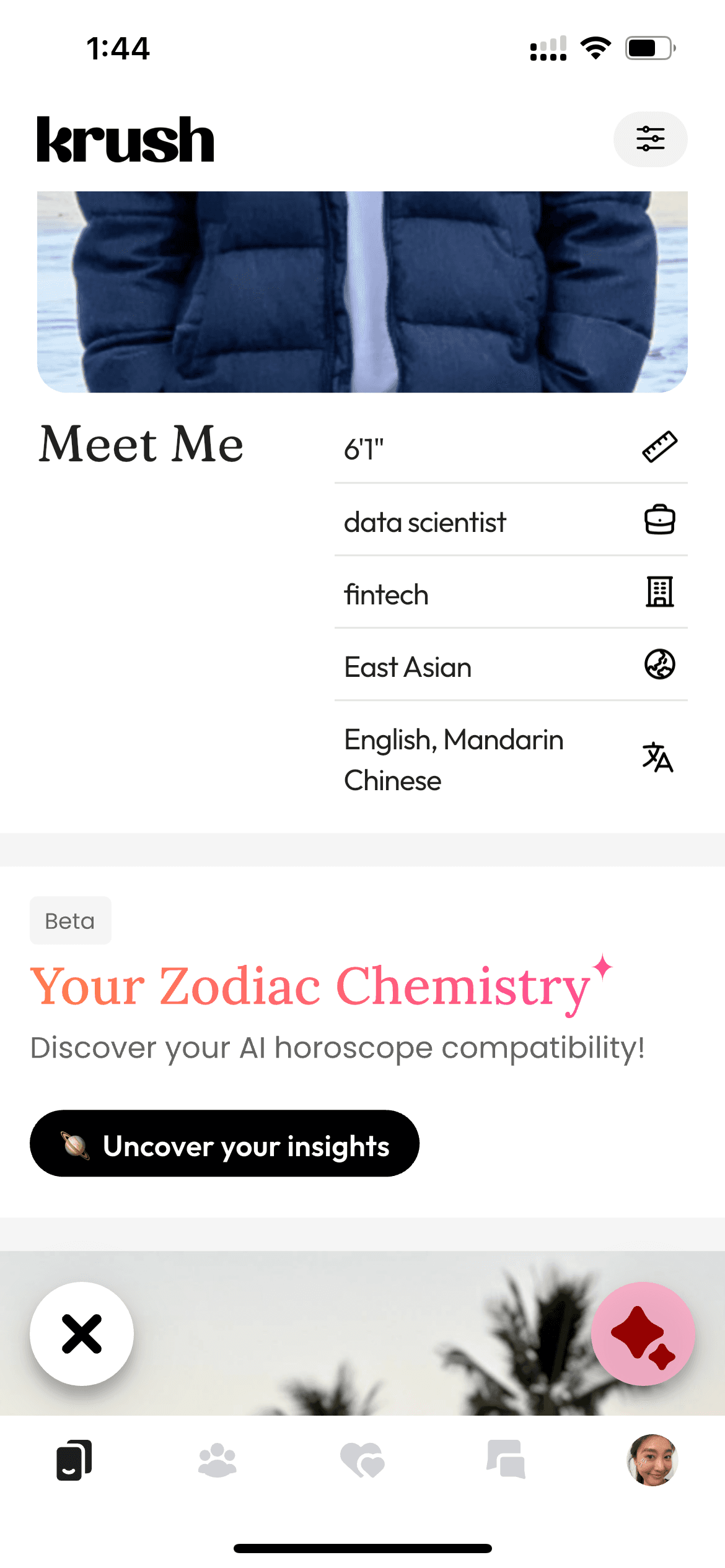
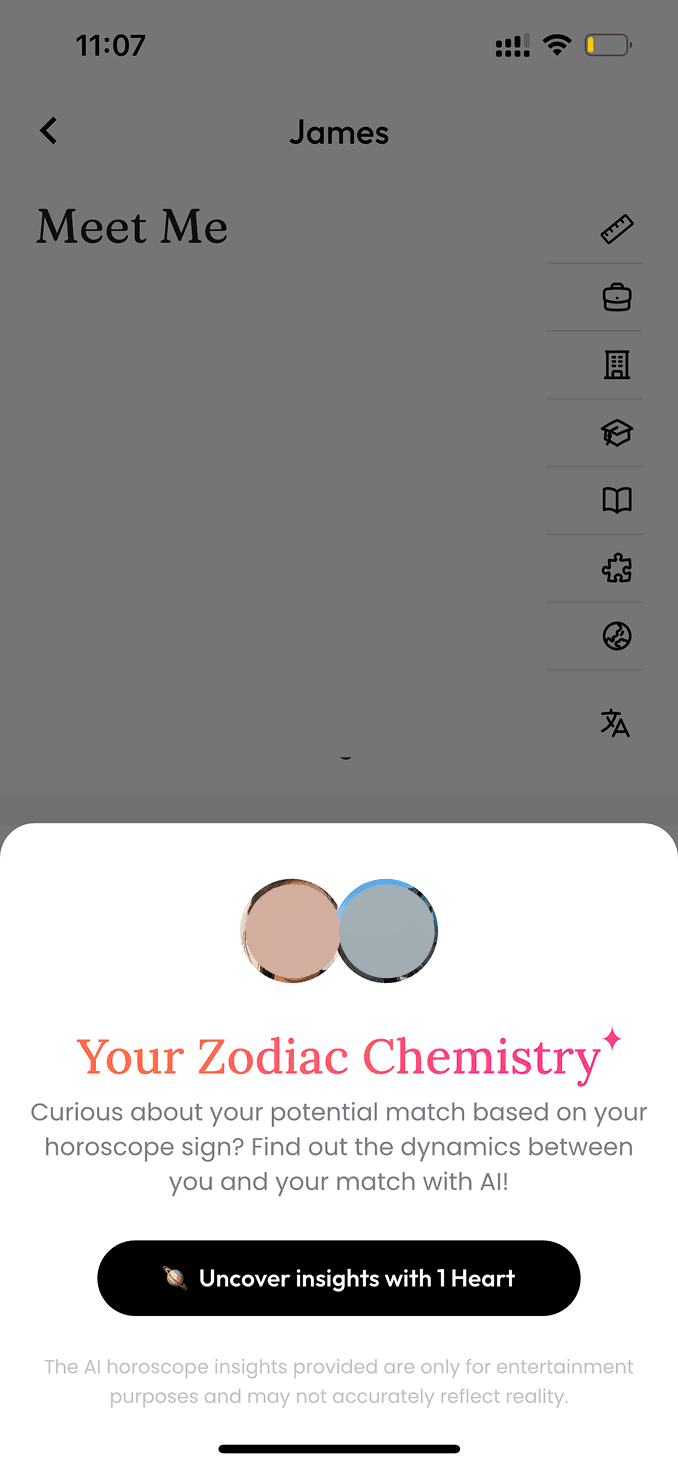
Users see this feature as a post-match curiosity, not a pre-match decision-making tool. As a result, they are not willing to spend a heart to try it out at this stage
Users see this feature as a post-match curiosity, not a pre-match decision-making tool. As a result, they are not willing to spend a heart to try it out at this stage
The current entrance of this feature is located in the middle of the user’s profiles —prior to matching, when users are still in the browsing and evaluation phase.
The current entrance of this feature is located in the middle of the user’s profiles —prior to matching, when users are still in the browsing and evaluation phase.
The current user flow for organically discovering Zodiac feature
The current user flow for organically discovering Zodiac feature
Users do not view zodiac-based compatibility as a filtering or discovery mechanism, but rather as an enhancement for deepening engagement with someone they are already have matched with.
This behavior suggests that the feature occupies a post-match role in the user journey.
Users do not view zodiac-based compatibility as a filtering or discovery mechanism, but rather as an enhancement for deepening engagement with someone they are already have matched with.
This behavior suggests that the feature occupies a post-match role in the user journey.
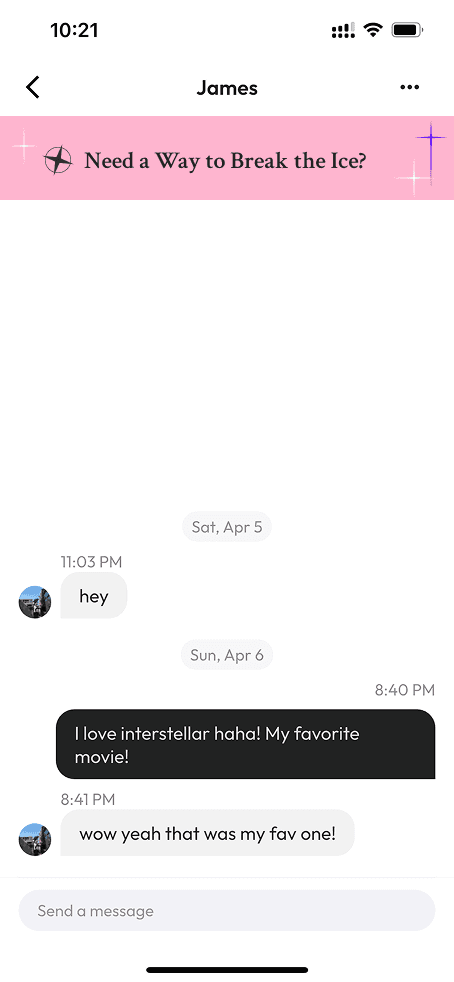
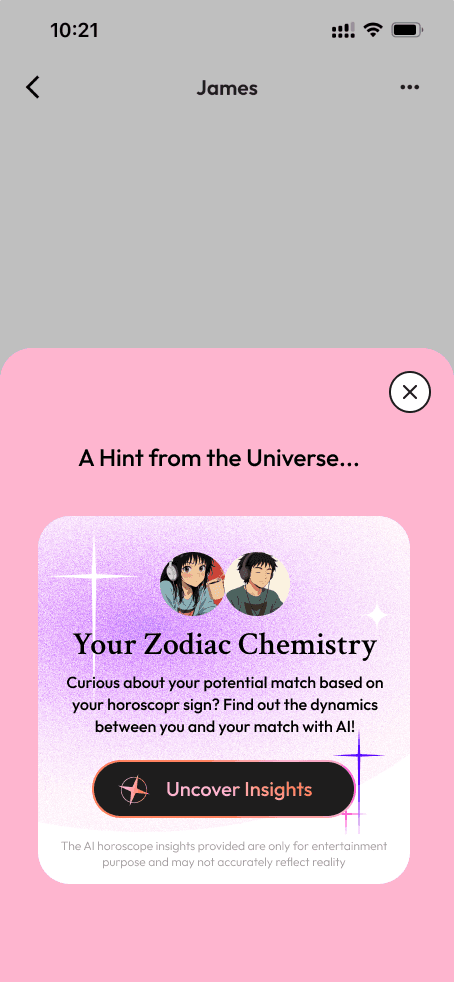
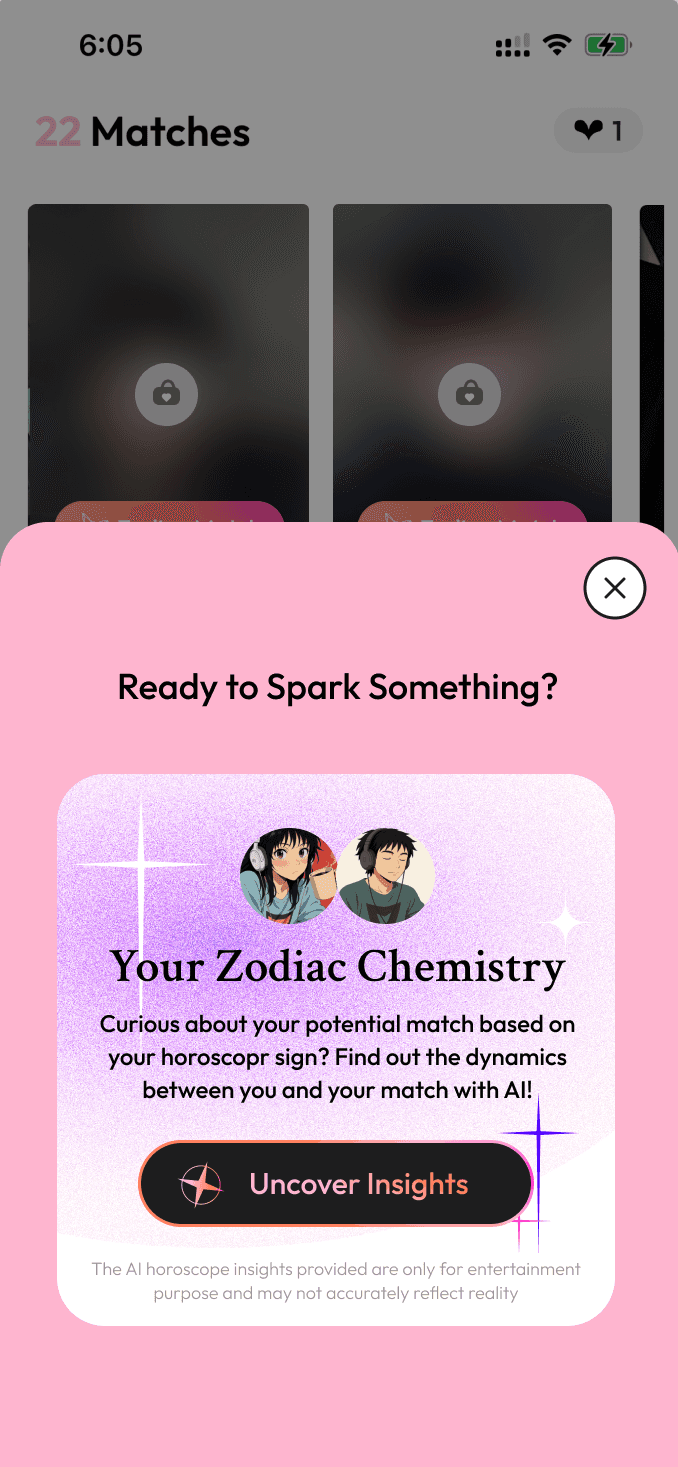
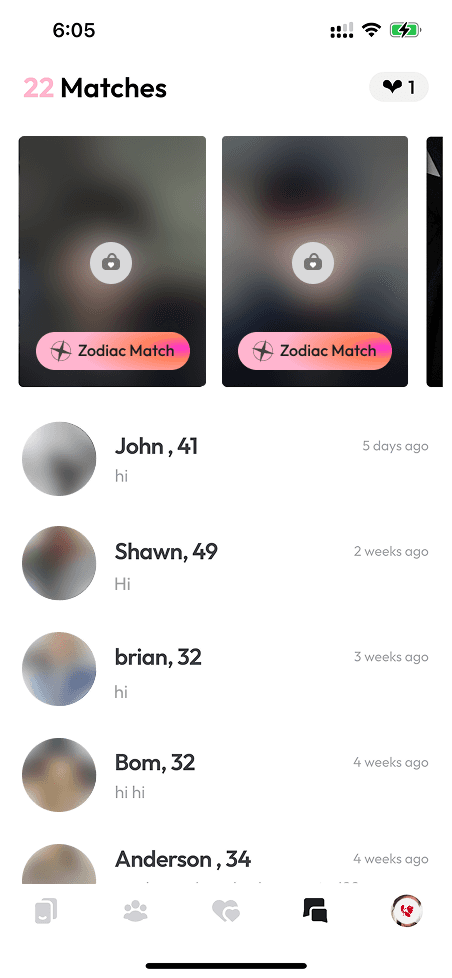
To match user expectations, the feature should appear later in the user journey, ideally after a match is made or during initial conversations. Add entrance button up front on user’s avatar thumbnail enhance the discoverability.
To match user expectations, the feature should appear later in the user journey, ideally after a match is made or during initial conversations. Add entrance button up front on user’s avatar thumbnail enhance the discoverability.
Relocate the feature main entry point to the chat screen for easier access when users are engaging with their match.
Relocate the feature main entry point to the chat screen for easier access when users are engaging with their match.
Introduce contextual prompts, Use a inline banner:
“Need a way to break the ice? Tap to reveal your zodiac chemistry.”This approach aligns with how users naturally think about fate and chemistry—as an add-on, not a filter
Therefore, the compatibility report could act as a lightweight bonding tool—providing a playful icebreaker or serving as a shared topic of discussion that supports continued interaction.
Introduce contextual prompts, Use a inline banner:
“Need a way to break the ice? Tap to reveal your zodiac chemistry.”This approach aligns with how users naturally think about fate and chemistry—as an add-on, not a filter
Therefore, the compatibility report could act as a lightweight bonding tool—providing a playful icebreaker or serving as a shared topic of discussion that supports continued interaction.
Design Solutions:
Design Solutions:
Shift the Feature Timing & Entry Point
Shift the Feature Timing & Entry Point
Check the prototype
Check the prototype
Key Finding 2: Zodiac report Credibility and Depth Concerns
Key Finding 2: Zodiac report Credibility and Depth Concerns
Zodiac Report Content
Lack of Transparency and Depth
Zodiac Report Content
Lack of Transparency and Depth
You’re generalizing people by year… that doesn’t feel accurate.
You’re generalizing people by year… that doesn’t feel accurate.
100% express concerns about reliability
100% express concerns about reliability
100% thought the features is about western zodiac
100% thought the features is about western zodiac
I wouldn’t spend a heart on this—there’s not enough info yet.”
I wouldn’t spend a heart on this—there’s not enough info yet.”
The score is cool, but what am I supposed to do with it?
The score is cool, but what am I supposed to do with it?
Users questioned the credibility of the zodiac compatibility score, especially when its basis (birth year only) wasn’t explained. Some felt the feature lacked substance and would not justify spending a heart.
Users questioned the credibility of the zodiac compatibility score, especially when its basis (birth year only) wasn’t explained. Some felt the feature lacked substance and would not justify spending a heart.
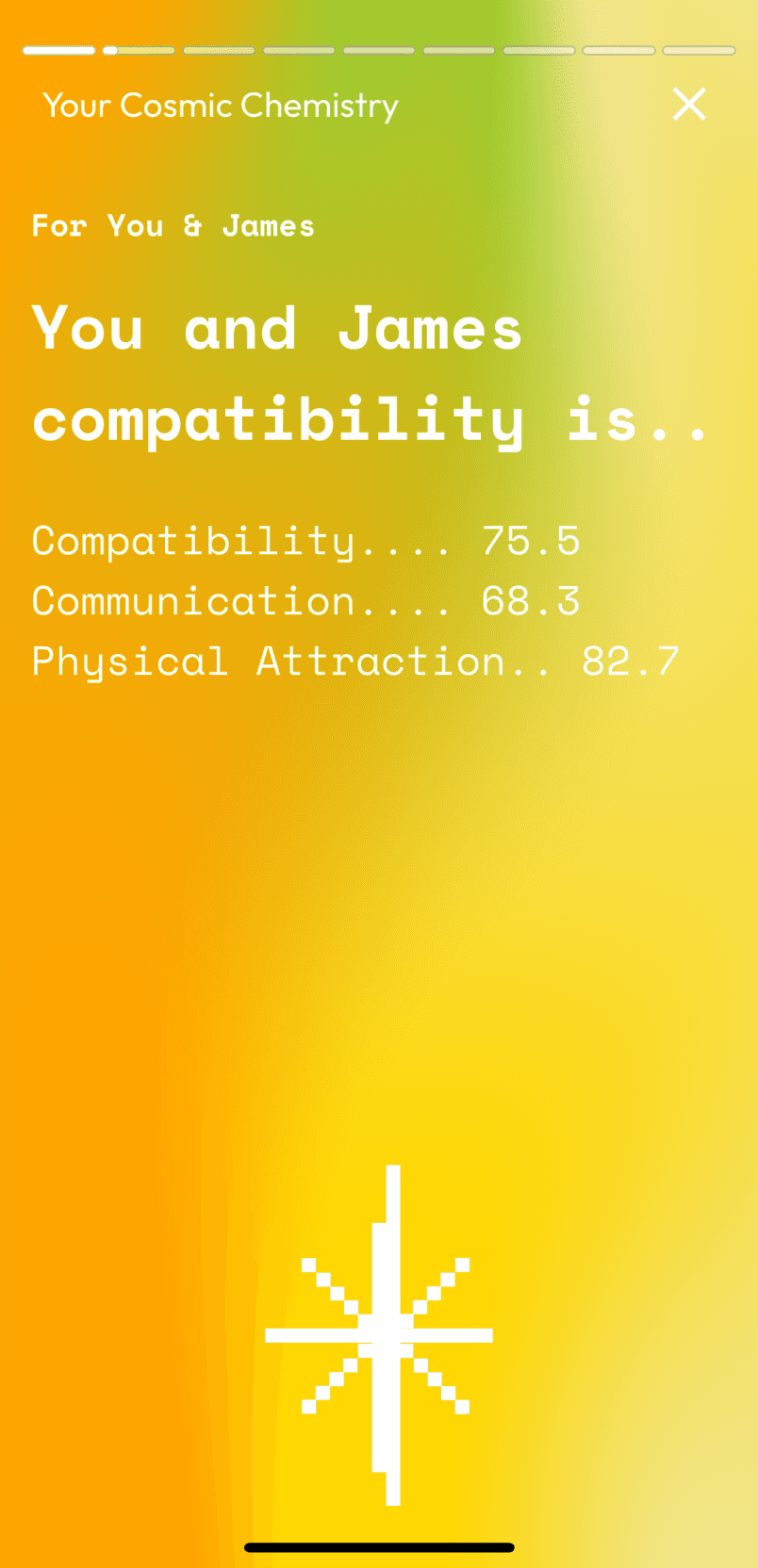
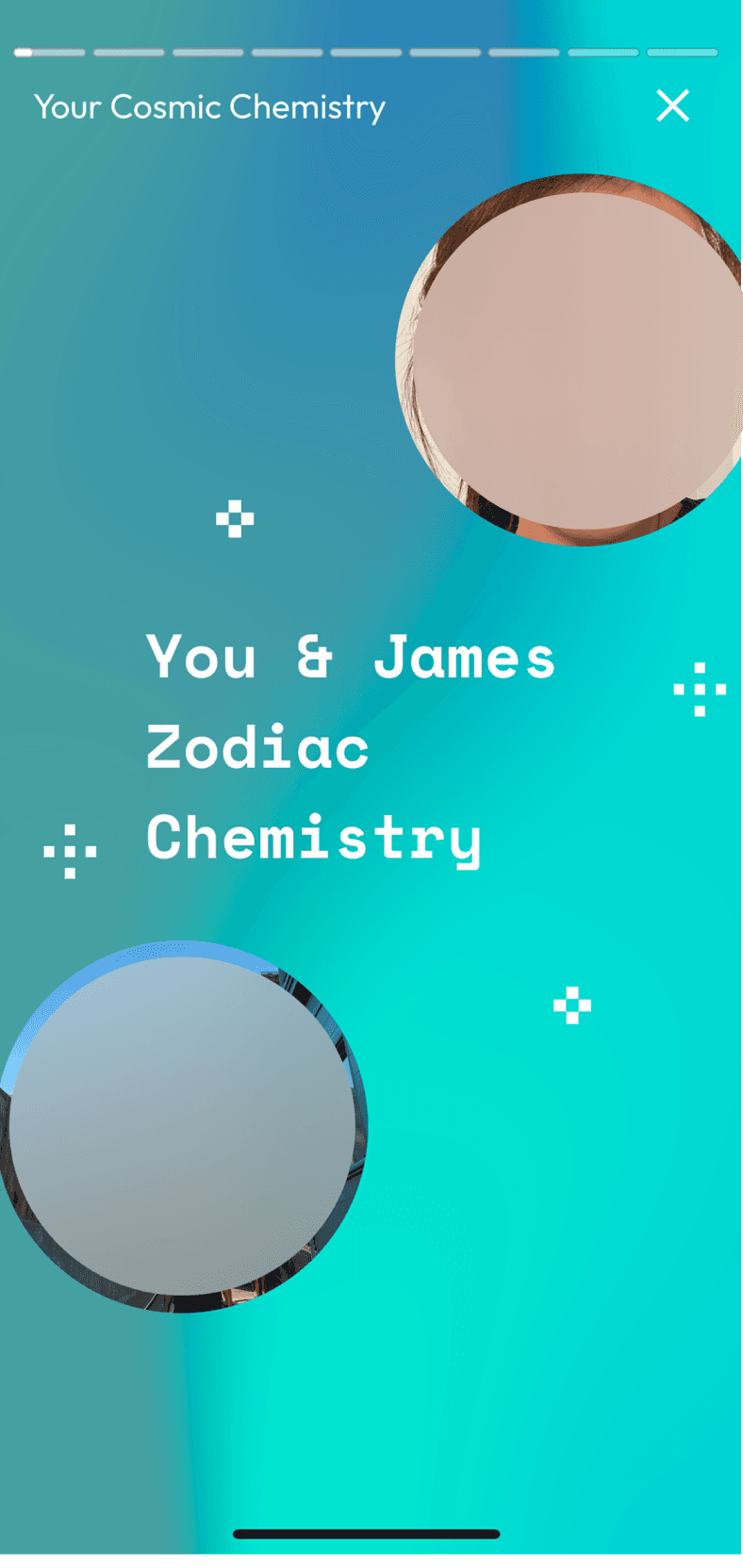
Lack of information on the cover
Lack of information on the cover
The color contrast are not accessible to help users scan and read
The color contrast are not accessible to help users scan and read
Users are skeptical about the data
Users are skeptical about the data
This is the content users found helpful and want to see more
This is the content users found helpful and want to see more
The current flow is presented in a format similar to Instagram Stories,
but some users struggle to finish reading the content before the next page appears
The current flow is presented in a format similar to Instagram Stories,
but some users struggle to finish reading the content before the next page appears
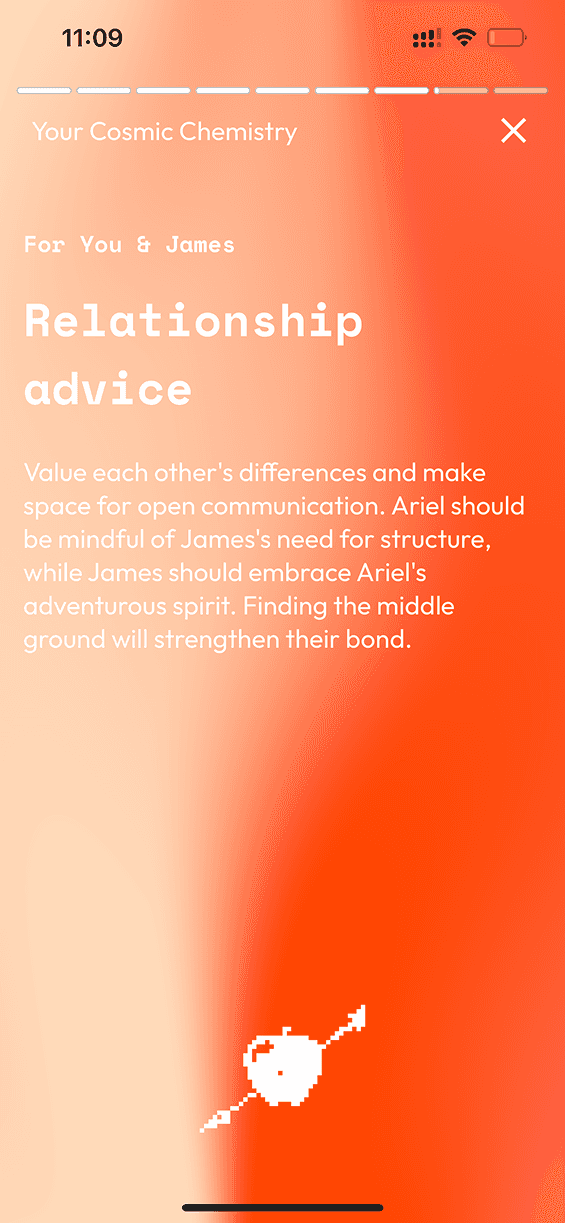
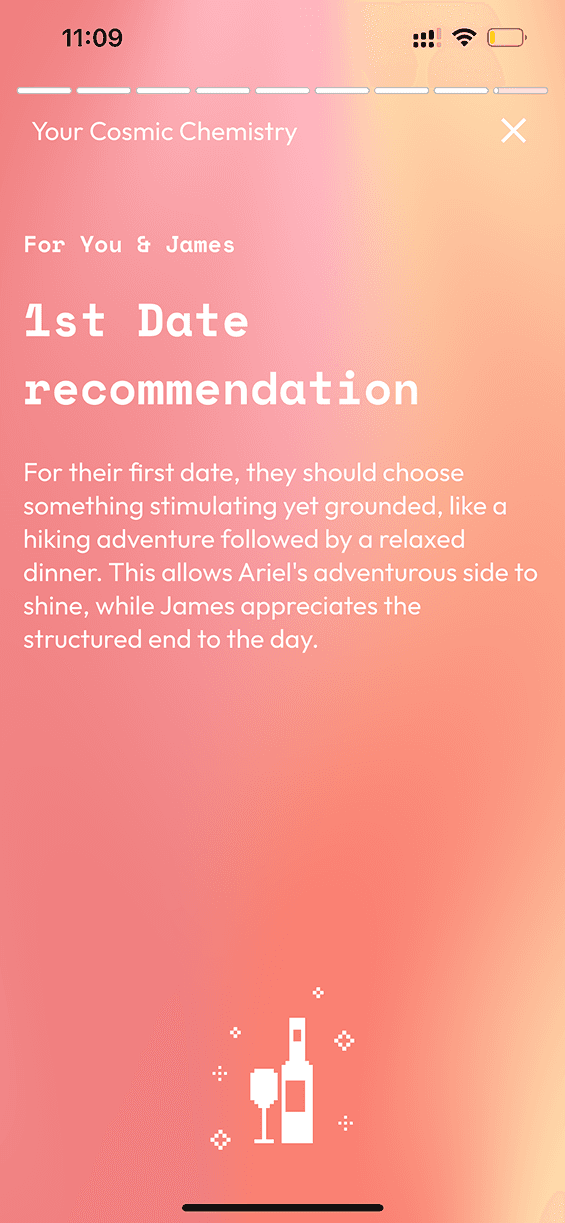
The current implementation uses an auto-advancing "story" format, which caused some users to feel rushed or lose access to content before fully reading each slide. To improve usability and user agency, the feature should adopt a manual swipe interaction pattern.
The current implementation uses an auto-advancing "story" format, which caused some users to feel rushed or lose access to content before fully reading each slide. To improve usability and user agency, the feature should adopt a manual swipe interaction pattern.

Allow pausing, replaying, or skipping, mimicking best practices from familiar formats like Instagram Stories or onboarding tours
Allow pausing, replaying, or skipping, mimicking best practices from familiar formats like Instagram Stories or onboarding tours
Use a strong contrast color, clearly anchor the user’s position within the experience
Use a strong contrast color, clearly anchor the user’s position within the experience
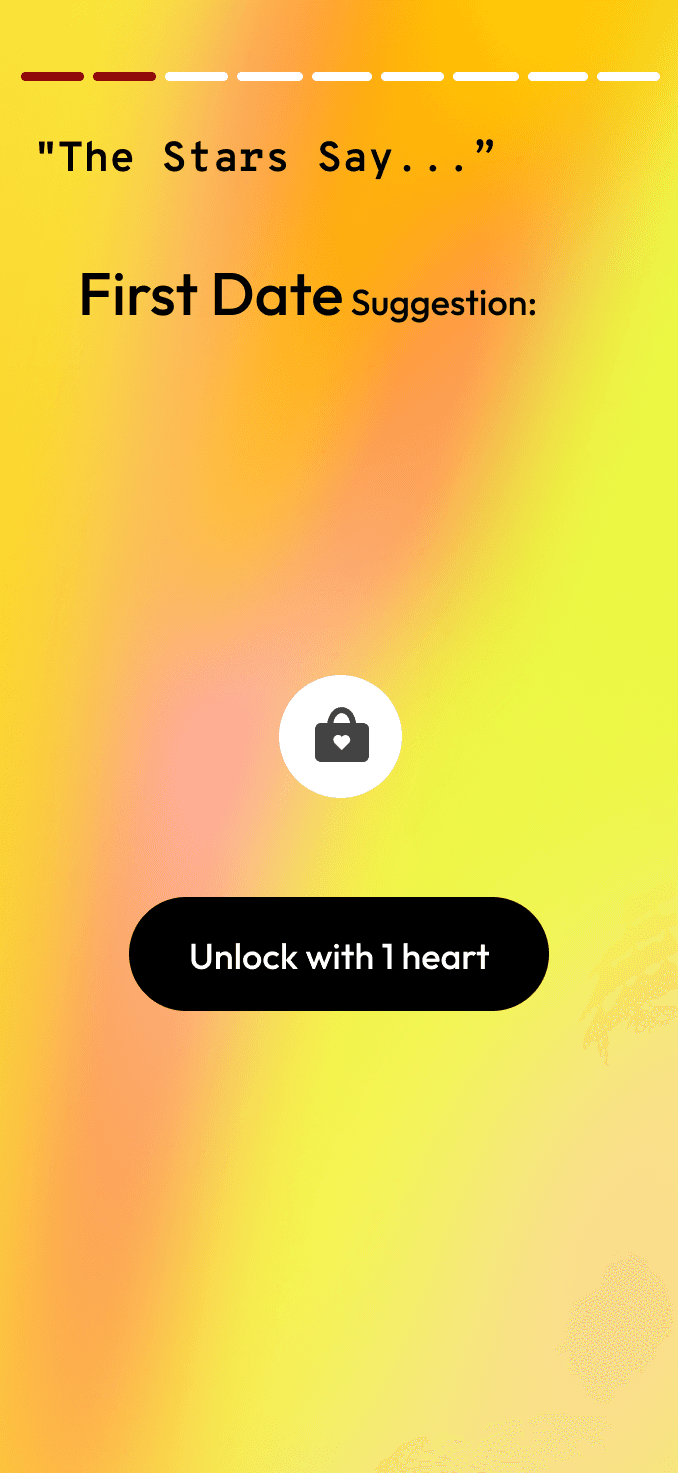
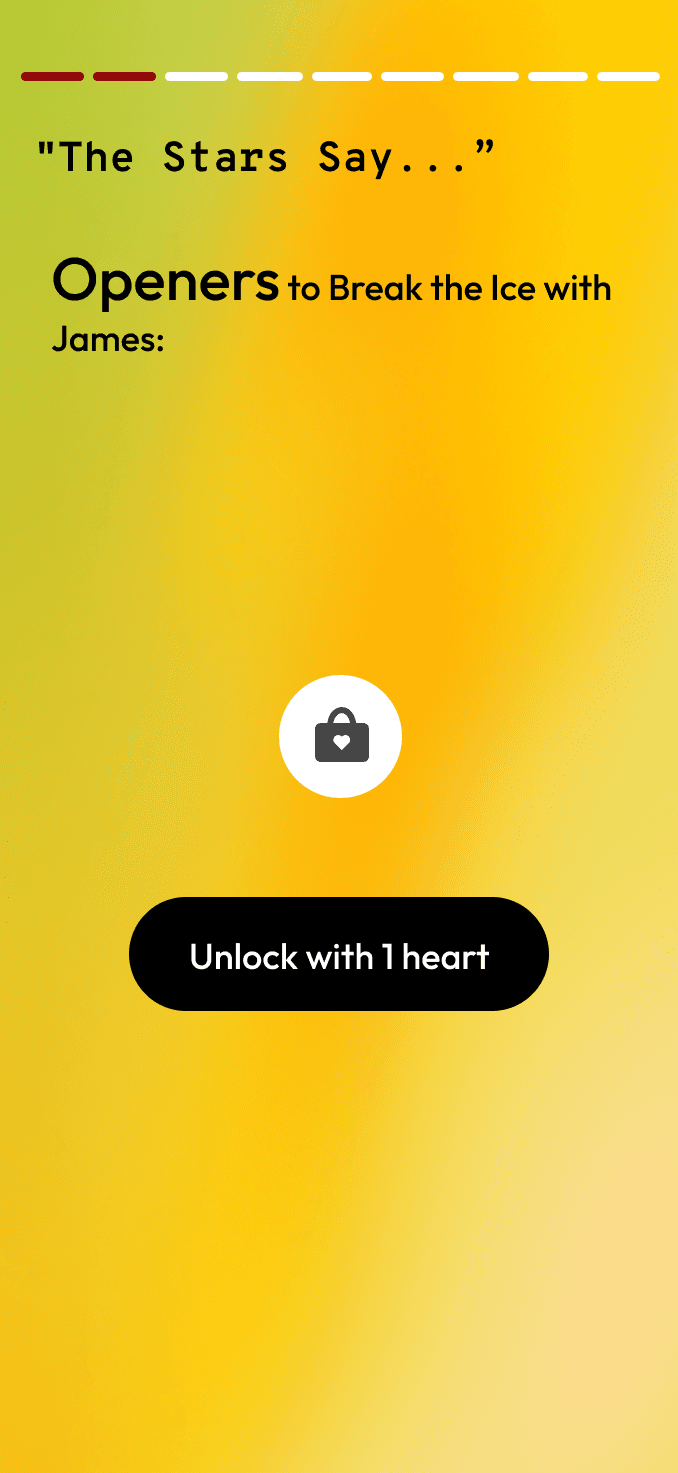
Increase Transparency and Surface Value Upfront
Increase Transparency and Surface Value Upfront
Expand the Compatibility Index for Credibility
Expand the Compatibility Index for Credibility
Enhance Interaction Design
Enhance Interaction Design
Shift from Static Content to Actionable Insights
Shift from Static Content to Actionable Insights
Rather than presenting users with vague compatibility descriptions, the feature should offer contextual, personalized suggestions that can be acted upon. These insights can serve as natural facilitators for relationship-building and conversation.
This shift reframes the feature as a supportive tool, not just a symbolic score, increasing its utility and emotional relevance.
Rather than presenting users with vague compatibility descriptions, the feature should offer contextual, personalized suggestions that can be acted upon. These insights can serve as natural facilitators for relationship-building and conversation.
This shift reframes the feature as a supportive tool, not just a symbolic score, increasing its utility and emotional relevance.
Users were unwilling to spend in-app currency (hearts) to unlock content they perceived as superficial or unexplained.
To address this, Krush could:
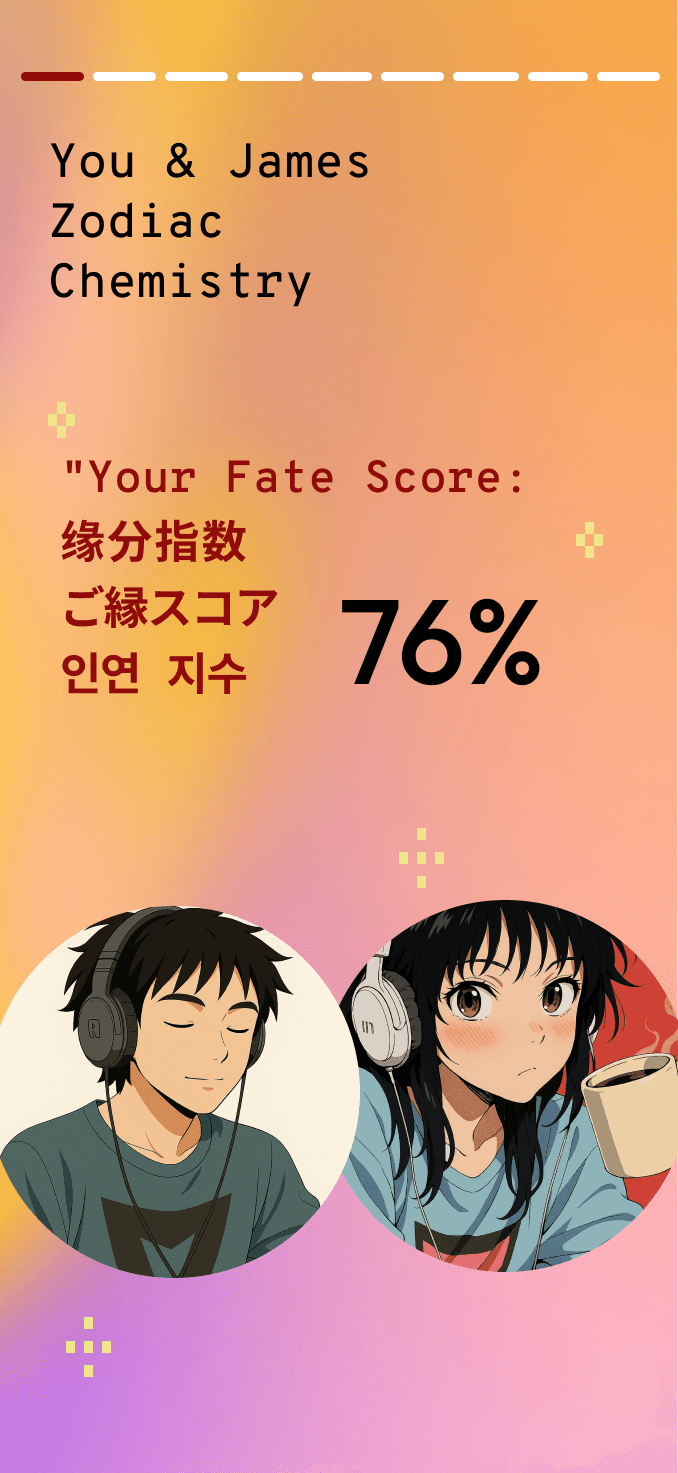
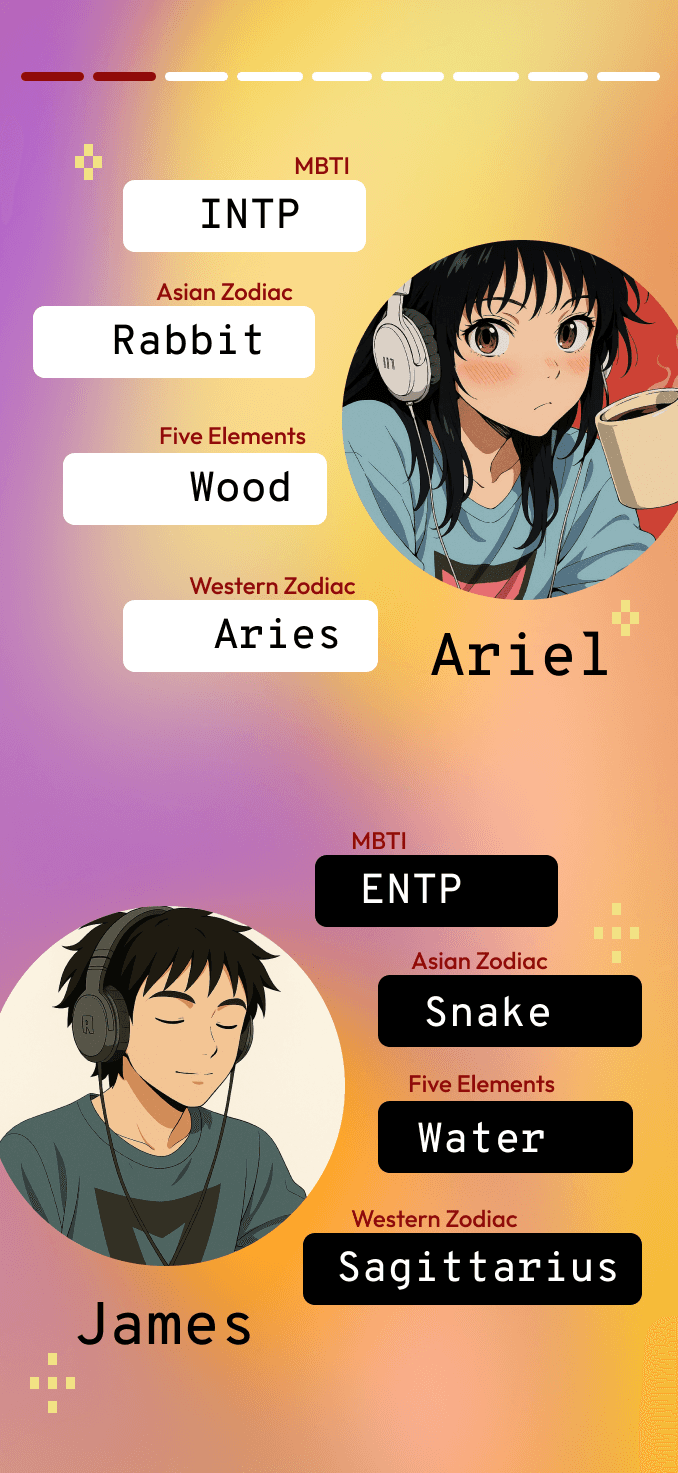
Display a compatibility score preview upfront, such as a percentage match or headline summary (“You and James are a 76% match: Curious Opposites”)
Provide a page of “How It Works” explainer, clarifying the basis of the score
Delay the heart prompt until users have had a chance to preview meaningful value
Users were unwilling to spend in-app currency (hearts) to unlock content they perceived as superficial or unexplained.
To address this, Krush could:
Display a compatibility score preview upfront, such as a percentage match or headline summary (“You and James are a 76% match: Curious Opposites”)
Provide a page of “How It Works” explainer, clarifying the basis of the score
Delay the heart prompt until users have had a chance to preview meaningful value
Display both avatars together to create a visual cue of a romantic match.
Display both avatars together to create a visual cue of a romantic match.
The main index score is shown on the cover as a hook to arouse user’s interests
The main index score is shown on the cover as a hook to arouse user’s interests
Title in multiple asian language to accent the asian vibe in this feature.
Title in multiple asian language to accent the asian vibe in this feature.
Color and form
build for accessibility
Color and form
build for accessibility
Design Solutions:
Design Solutions:
Shift content from static summary to actionable insights
Shift content from static summary to actionable insights
To increase the perceived accuracy and emotional resonance of the compatibility score, Krush should consider expanding the data sources beyond the current Asian zodiac.
We recommend integrating multiple personality and astrological systems to enrich the compatibility index.
Combining these inputs allows for a more holistic and credible compatibility model that better reflects diverse personality traits and cultural systems.
To increase the perceived accuracy and emotional resonance of the compatibility score, Krush should consider expanding the data sources beyond the current Asian zodiac.
We recommend integrating multiple personality and astrological systems to enrich the compatibility index.
Combining these inputs allows for a more holistic and credible compatibility model that better reflects diverse personality traits and cultural systems.
Suggested conversation starters tailored to the match’s zodiac and personality profile
Suggested conversation starters tailored to the match’s zodiac and personality profile
Check the prototype
Check the prototype
To be continue...
Presentation to Client
Our Client speaks highly for us,
and would like to continue work with the team
to execute on some of the recommendations
To increase engagement, the app should focus on improving clarity and feedback during key tasks, surfacing Events in more relevant and personalized contexts, and enhancing the Zodiac feature to offer insights that feel both playful and personally meaningful. With a focus on these improvements, the app can encourage users to explore and return, building deeper, more lasting connections beyond swipes.
To increase engagement, the app should focus on improving clarity and feedback during key tasks, surfacing Events in more relevant and personalized contexts, and enhancing the Zodiac feature to offer insights that feel both playful and personally meaningful. With a focus on these improvements, the app can encourage users to explore and return, building deeper, more lasting connections beyond swipes.
Conclusion
Conclusion
Implementation Discussion:
Coordinate with the Krush team to identify which design recommendations—particularly those related to the Events and Zodiac Compatibility features—will be prioritized for development.
Optional Follow-Up Support: Offer additional clarification, design refinement, or iteration support should the client begin implementing our proposed solutions.
Implementation Discussion:
Coordinate with the Krush team to identify which design recommendations—particularly those related to the Events and Zodiac Compatibility features—will be prioritized for development.
Optional Follow-Up Support: Offer additional clarification, design refinement, or iteration support should the client begin implementing our proposed solutions.
Next Step For Our Team
Next Step For Our Team
Impact & Reflection:
This project helped me refine my skills in qualitative research, real-time testing facilitation, and synthesizing feedback into actionable product strategy. One of the most meaningful takeaways was learning how small interaction details, like confirmation feedback or a missing event tab can significantly affect trust and engagement. Designing for cultural relevance is not just about adding visual identity but about matching user expectations with emotionally resonant features.
As a UX researcher and designer, I walked away from this project with a deeper appreciation for timing, context, and feature framing as critical elements of user experience.
Impact & Reflection:
This project helped me refine my skills in qualitative research, real-time testing facilitation, and synthesizing feedback into actionable product strategy. One of the most meaningful takeaways was learning how small interaction details—like confirmation feedback or a missing event tab—can significantly affect trust and engagement. Designing for cultural relevance is not just about adding visual identity but about matching user expectations with emotionally resonant features.
As a UX researcher and designer, I walked away from this project with a deeper appreciation for timing, context, and feature framing as critical elements of user experience.