
Between Screens and Soil
Usability Analysis
Diary Study/ Qualitative Synthesis
Timeline
Team
Role
Methods
Context
6 weeks
Solo Project
UX Researcher
Interaction Designer
Diary Study
Interviews
Usability Evaluation
Conceptual Design
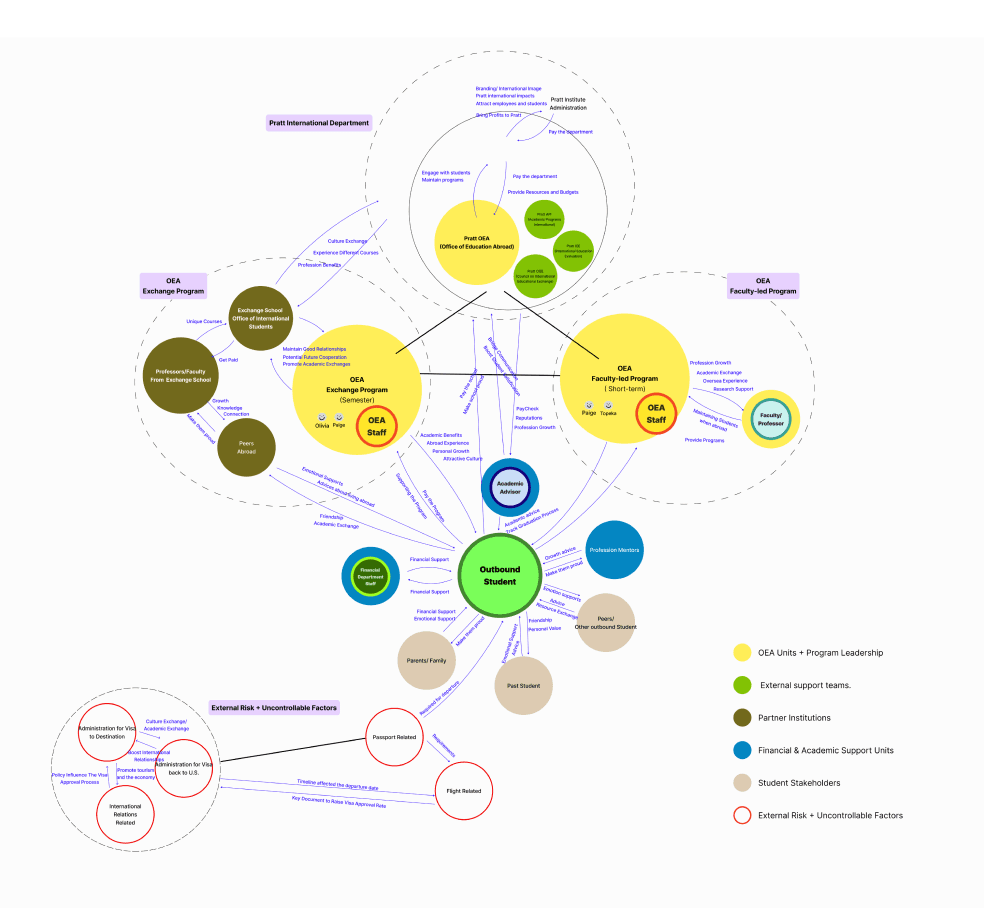
Sustainable
Interaction
Design
The Initial Problem:
Many people want to connect with nature, but don’t know where to start.
For urban residents especially, nature can feel distant, intimidating, or inaccessible, even when trails are physically nearby.
At the same time, environmental awareness is often treated as something that only happens after people go outdoors.
This project challenges that assumption.
Core Question:
Can digital exploration increase people’s
awareness of nature and motivate real-world engagement?
Using AllTrails as a case study, this project explores whether interaction design can
Spark curiosity about ecosystems
Extend ecological awareness into everyday life
Support sustainable behaviors through perception, not pressure
Reduce uncertainty for beginners
Research Approach
Pre-study interview
Diary study (time-based + event-based)
Post-study interview
Synthesis & analysis
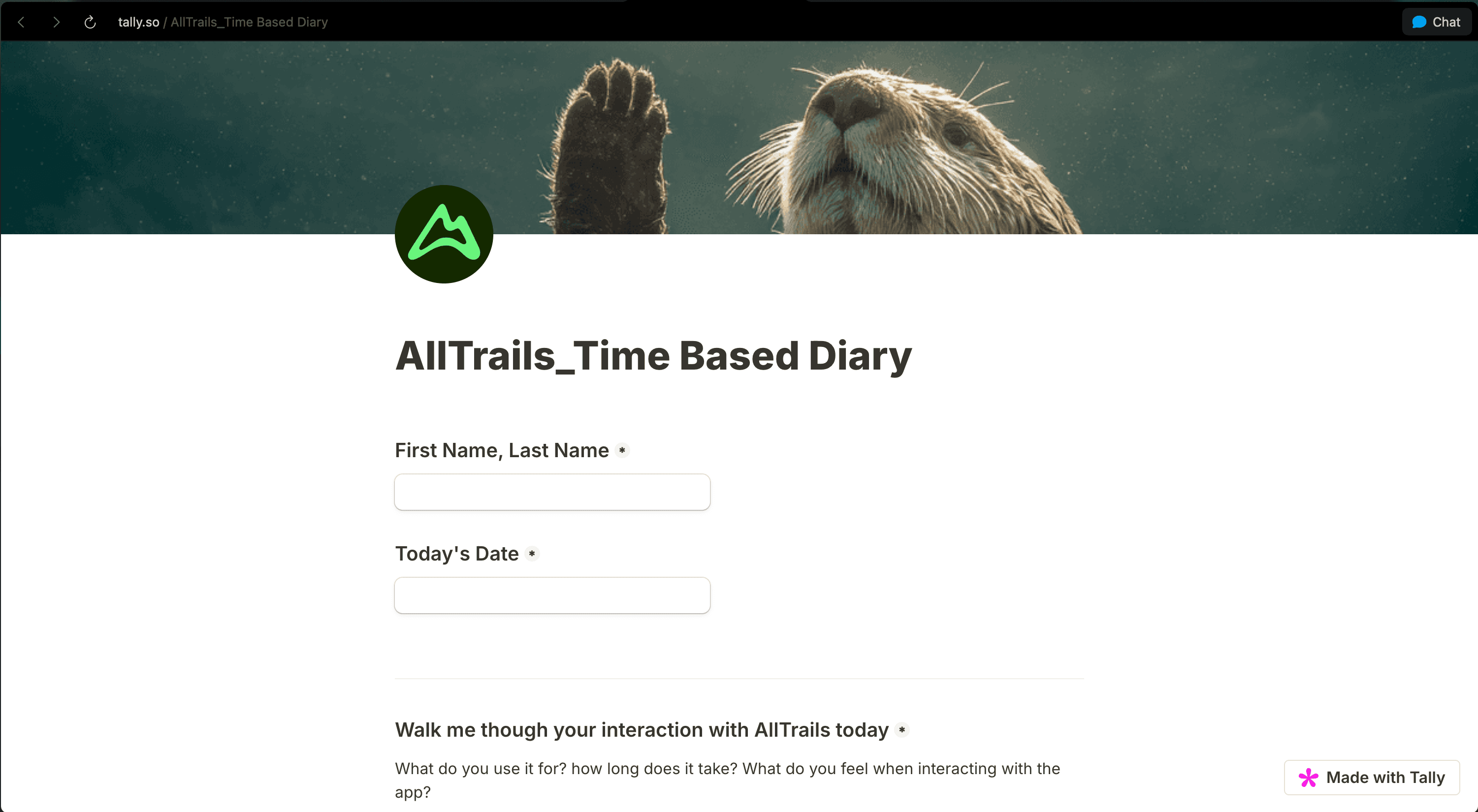
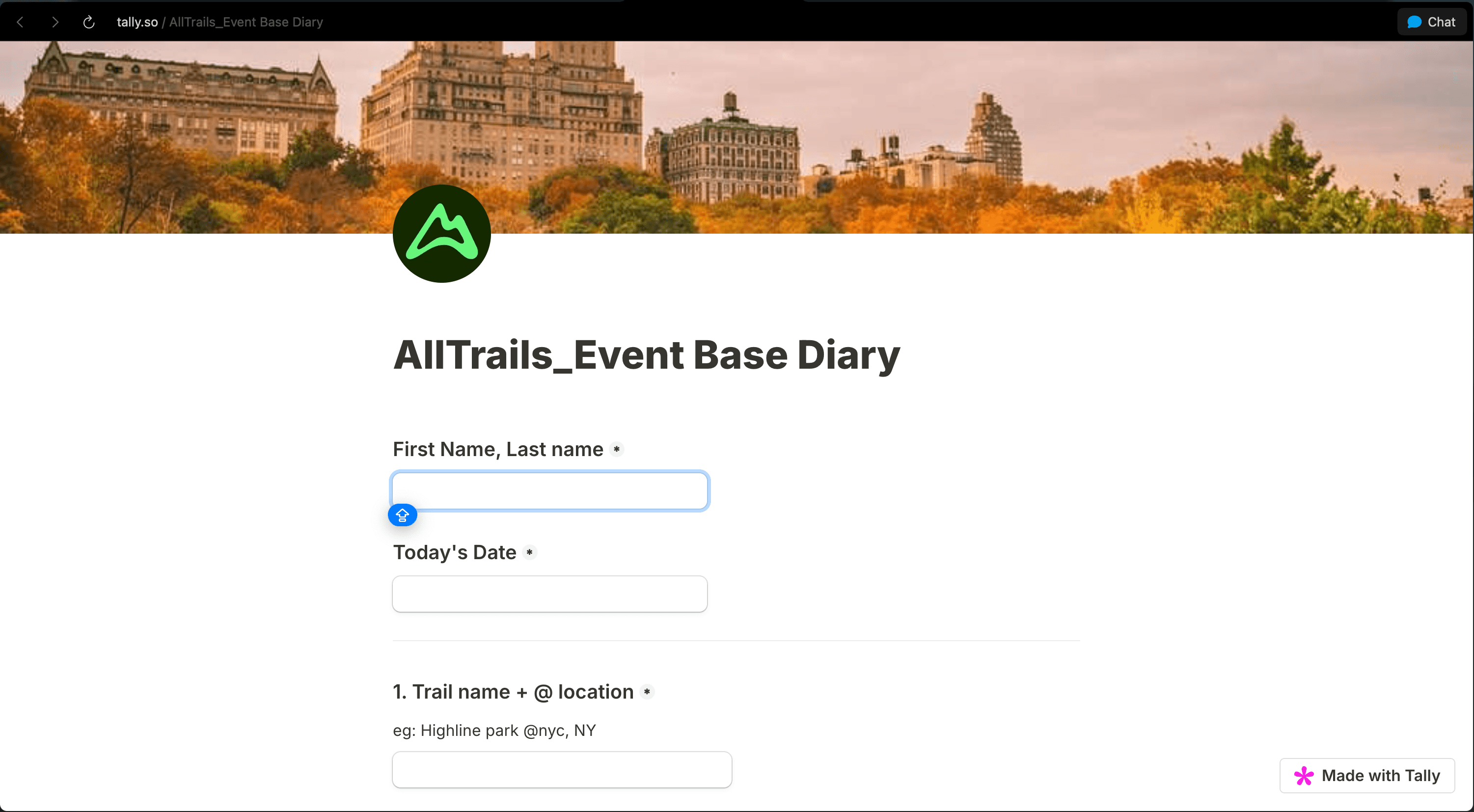
Steps:
Research Approach:
To understand these subtleties, I chose Diary Study, a method well suited for:
long-term behavioral change, emotional reflection, and everyday noticing.
This allowed me to capture not just what users did, but how their attention and perception evolved over time.
Archetypes
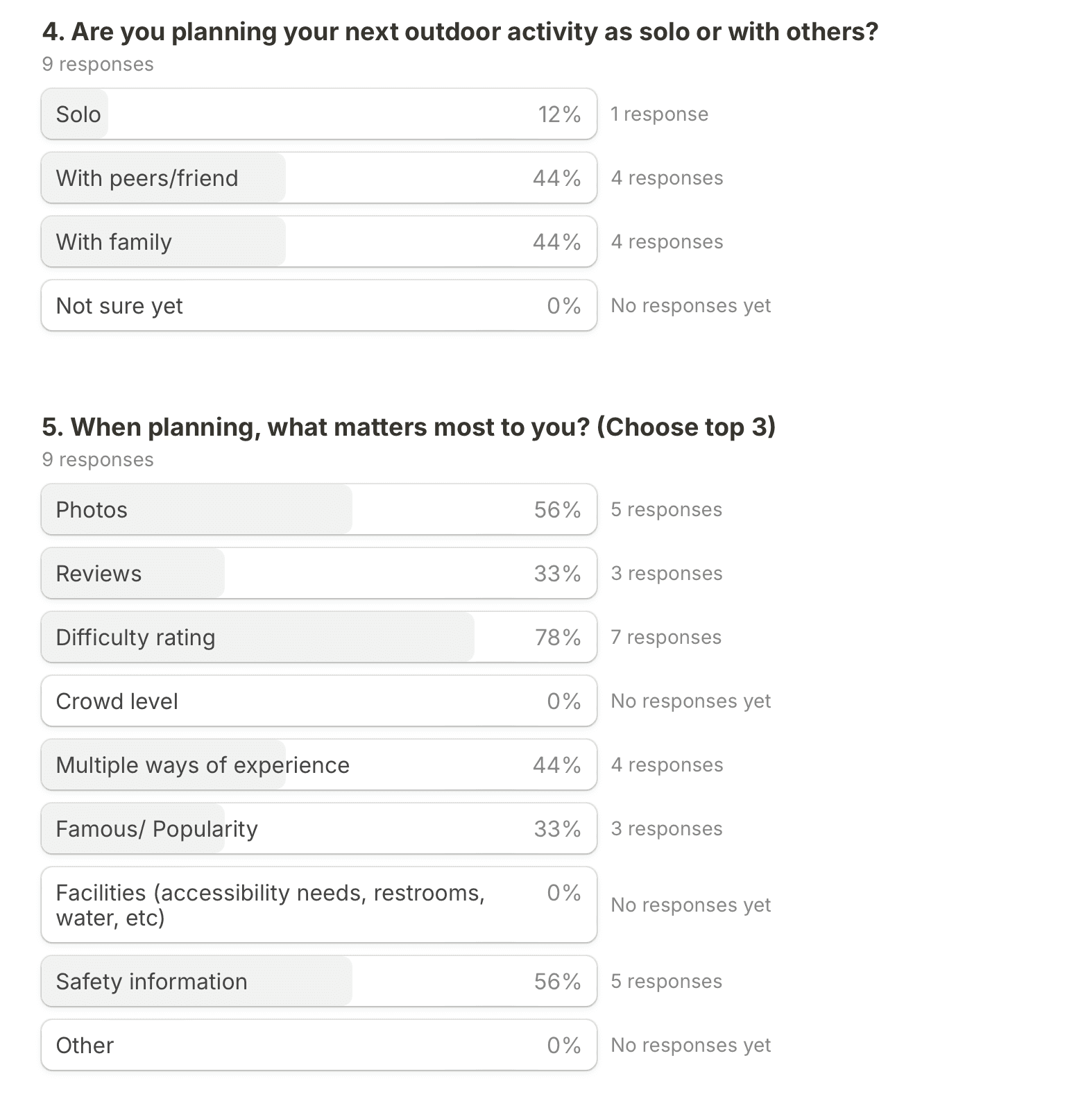
Through a survey questionnaire, patters of behaviors shows that there are
2 kinds of participants: Independent explorer and Peer seeker.
Insight:
Authentic trail photos and honest reviews built trust,
but she wanted more context: what to expect, how to prepare, and how to stay safe.
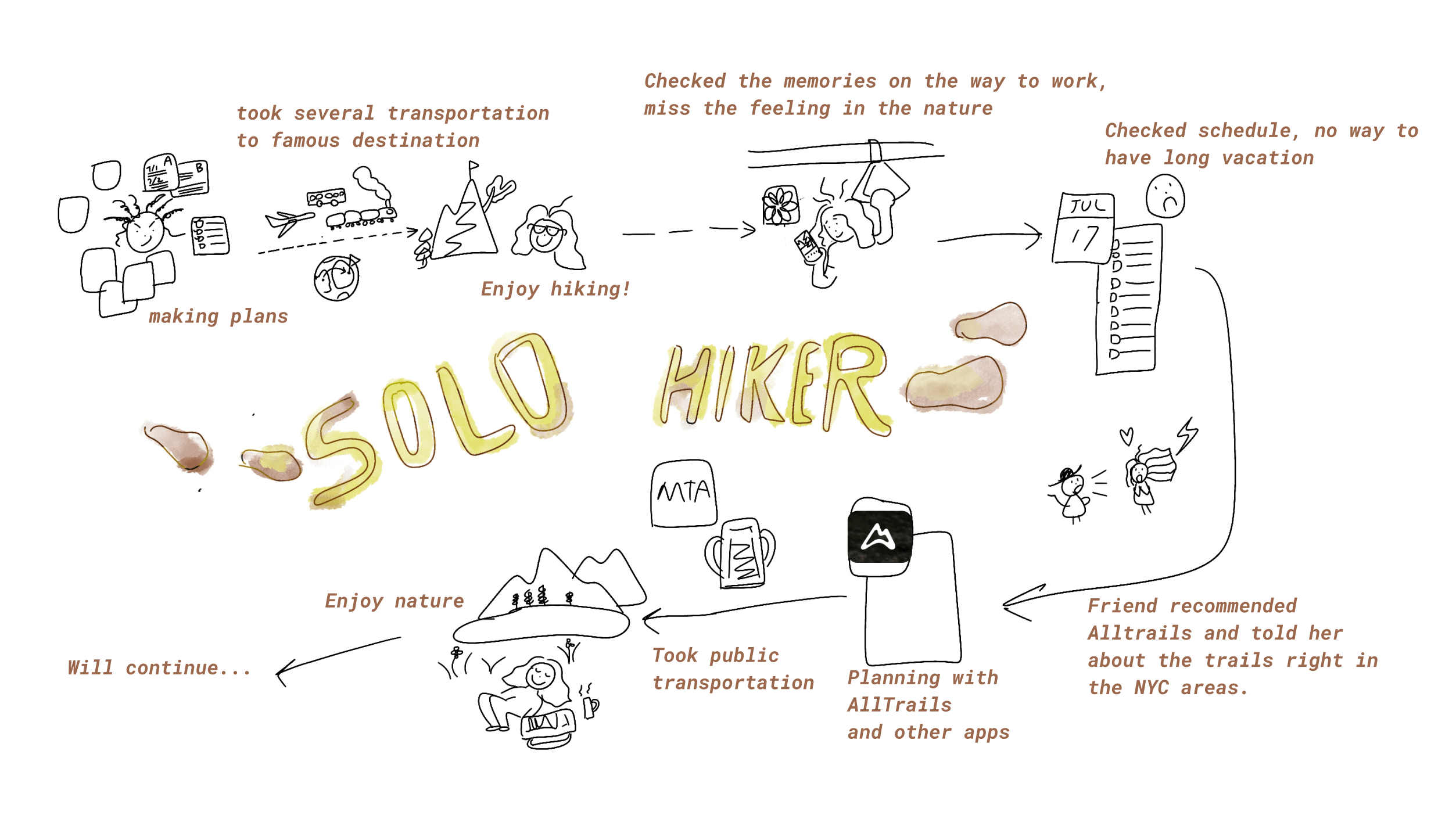
P1 — Independent Urban Explorer
28, NYC resident
No car, relies on public transportation
Often hikes solo
Key tension: She loves nature but feels constrained by logistics and safety uncertainty.
“It’s when I’m actually on the trail that I feel connected to nature.”
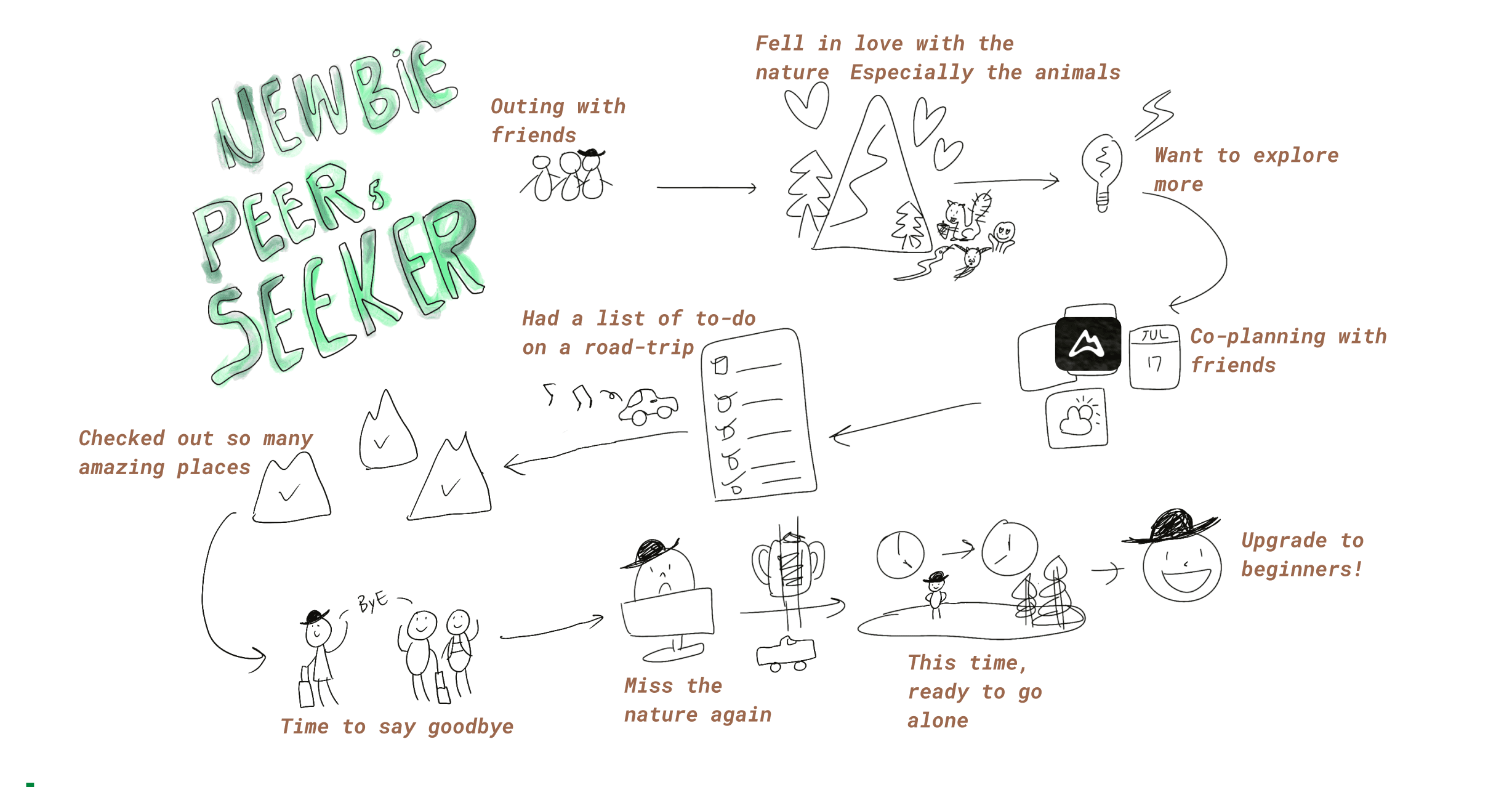
P2 — Curious Newbie
24, NJ resident
First-time hiker
Initially anxious about difficulty and safety
Key tension: She lacked confidence and ecological knowledge.
Insight:
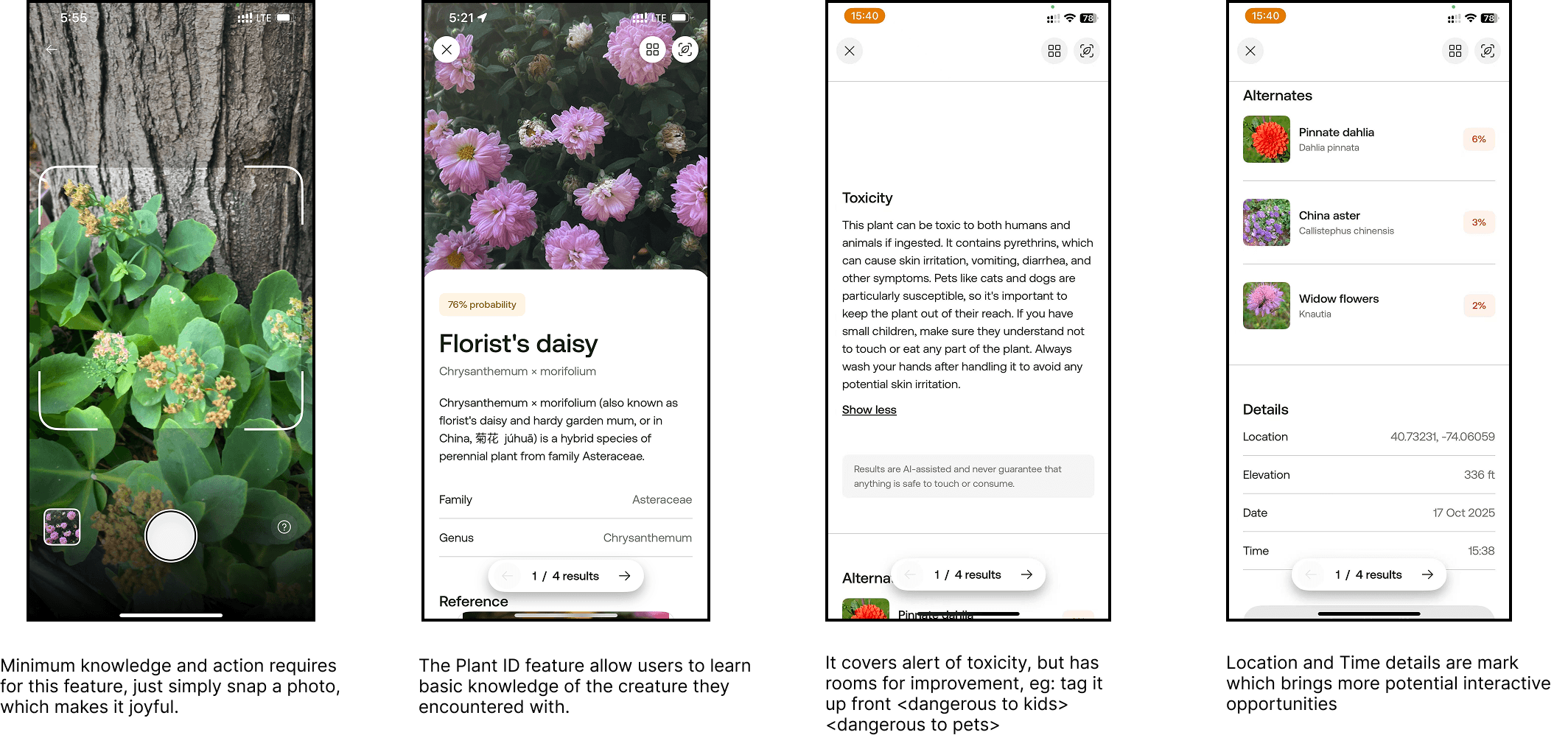
The Plant ID feature transformed her experience. She began noticing trees and plants not only on trails, but during her daily commute.
“The trees and plants feel more visible to me now.”
Researcher Reflection:
As a moderate hiker and parent, I’ve long used AllTrails for safety, distance, and logistics. But observing others reminded me that digital tools also carry emotional resonance. I began noticing that the most meaningful moments weren’t technical, they were sensory and relational: the air temperature, the light on leaves, the sound of one’s own footsteps.
This study became, in part, an inquiry into perception itself: how design can make nature not just reachable, but visible.
Key Findings
Learning Begins Before the Trail
Users’ awareness was often sparked before they went outside.
Browsing photos, reading reviews, or identifying plants tuned their attention in advance.
Confidence Comes from Emotional Reassurance
Maps and data helped, but reassurance mattered more.
Clear cues, relatable visuals, and safety signals turned anxiety into readiness.
After hikes, participants described the city as louder, messier, and more overwhelming.
Awareness of nature increased awareness of its absence.
Digital Encounters Can Lead to Real Connection
Digital curiosity didn’t replace physical experience, it led users toward it.
AllTrails functioned as a threshold between screen and soil.
Authenticity Builds Trust
Unfiltered photos and honest reviews felt more sustainable than polished imagery.
Truth made nature feel approachable.
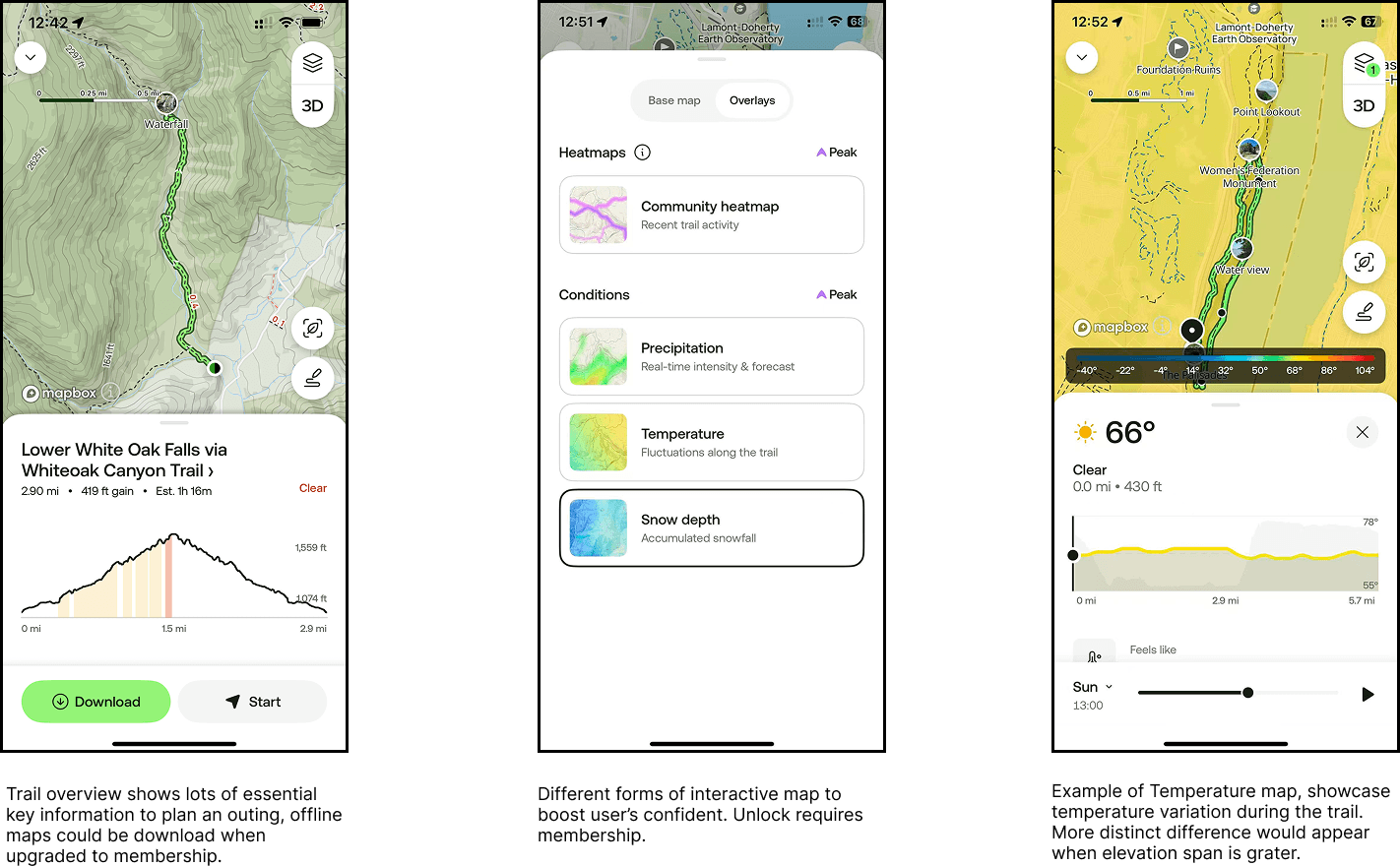
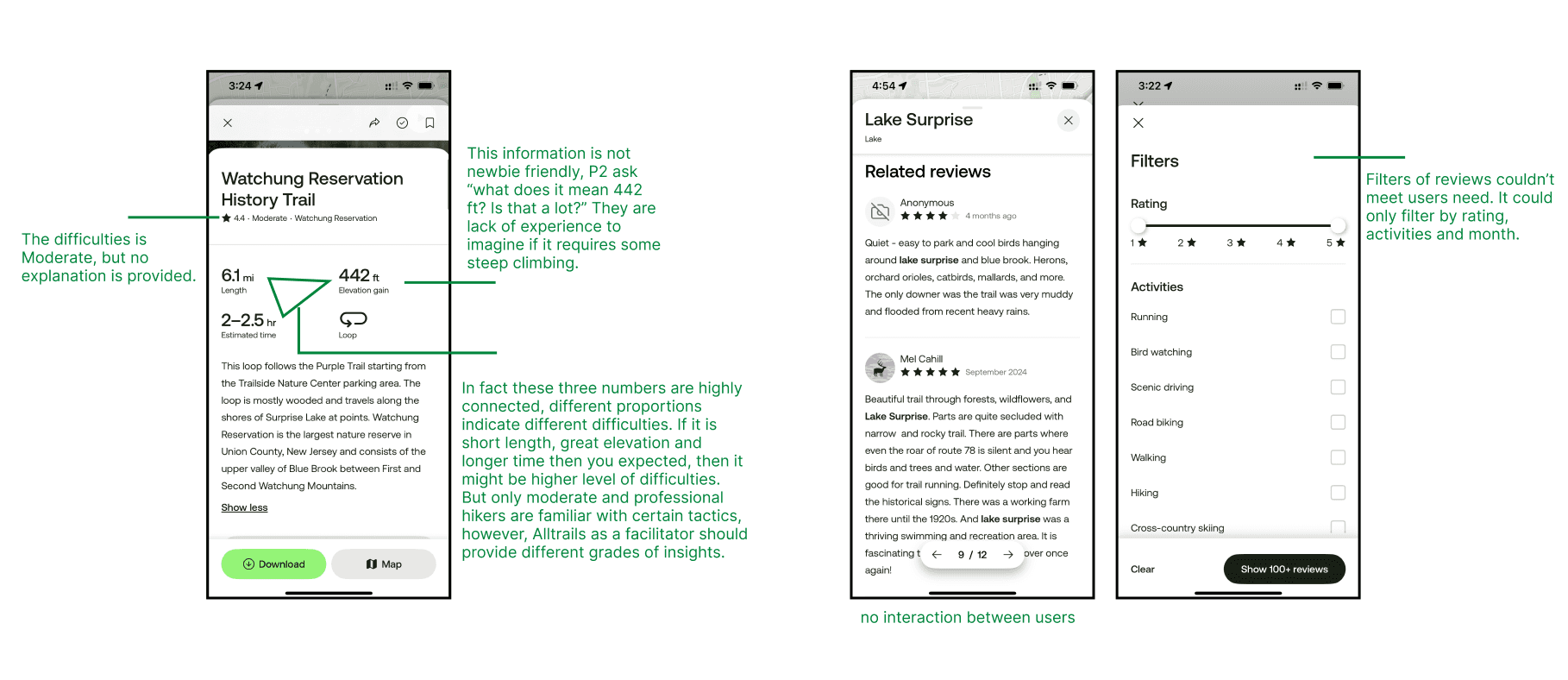
Usability & App Evaluation
Where it falls short
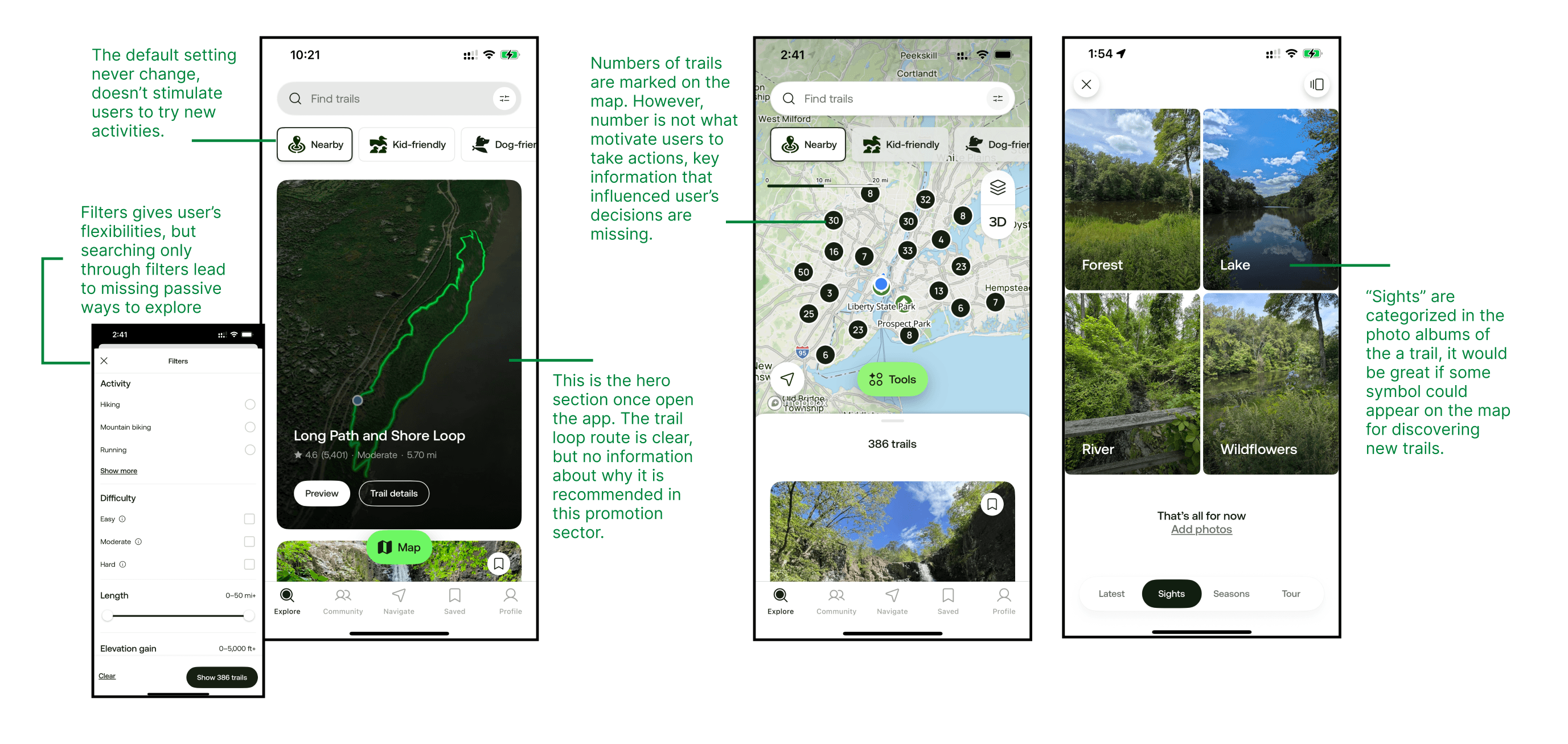
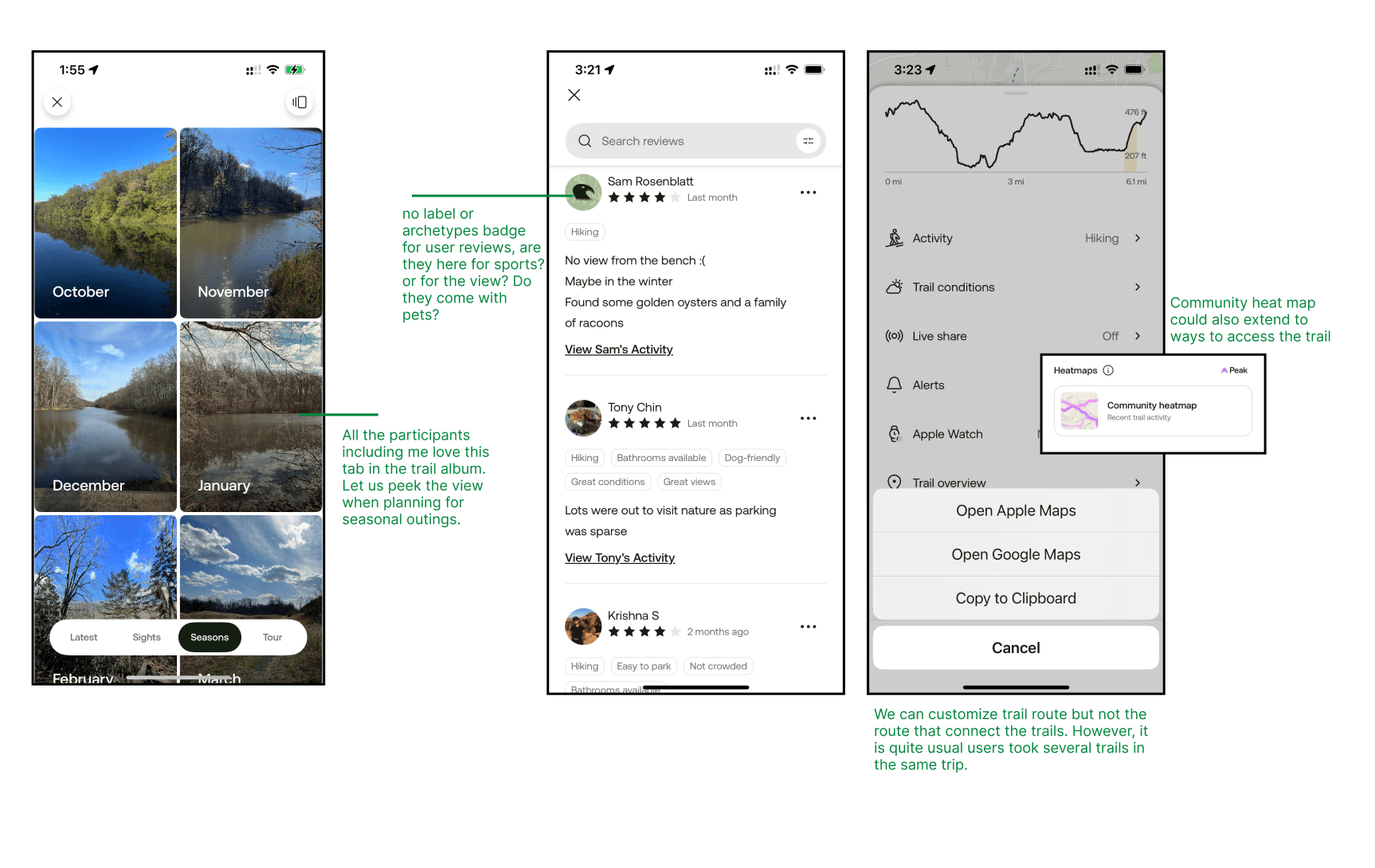
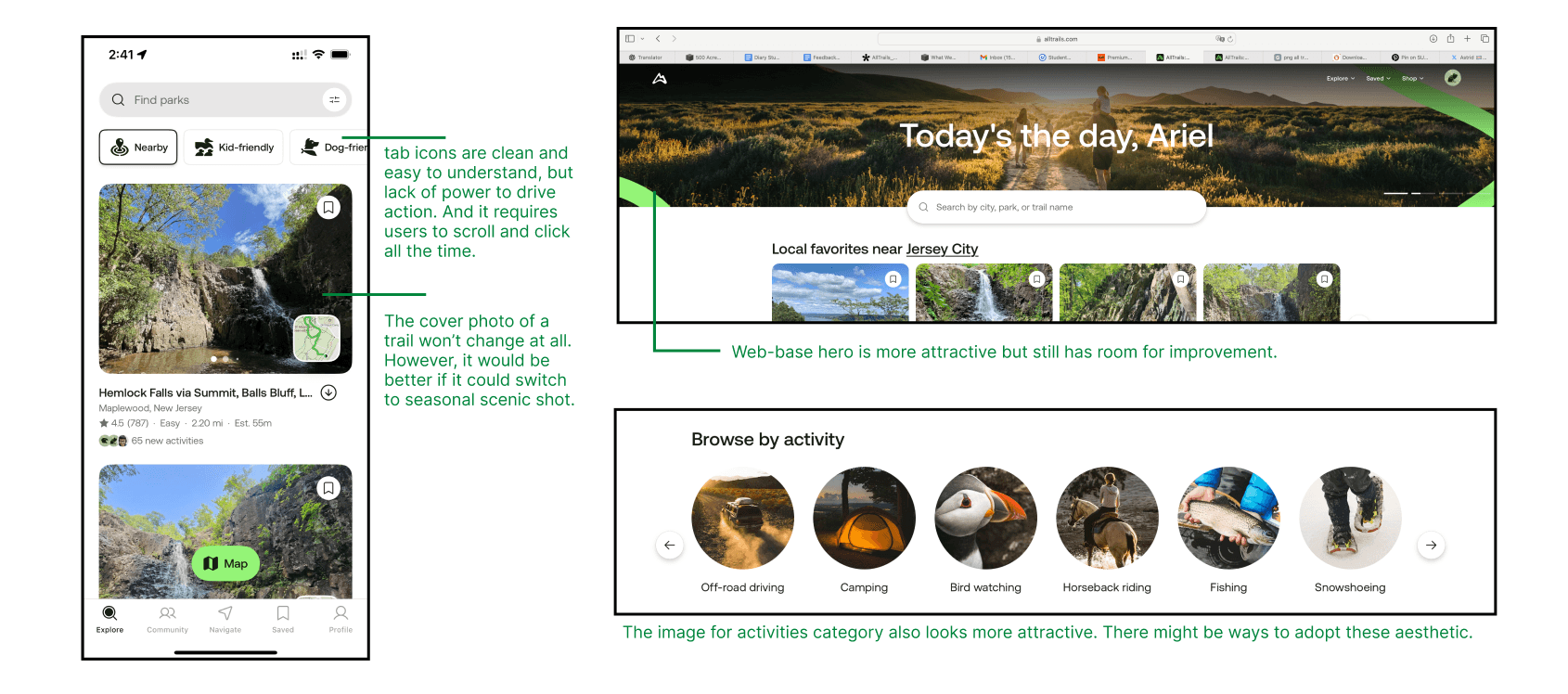
Fragmented information (users jump between apps)
Weak onboarding for beginners
Limited ecological storytelling
One-way community interaction
What works well
Reliable navigation
Trustworthy, crowd-sourced content
Offline maps that provide psychological safety
Design Directions
Rather than redesigning the app, I proposed conceptual directions grounded in research insights.
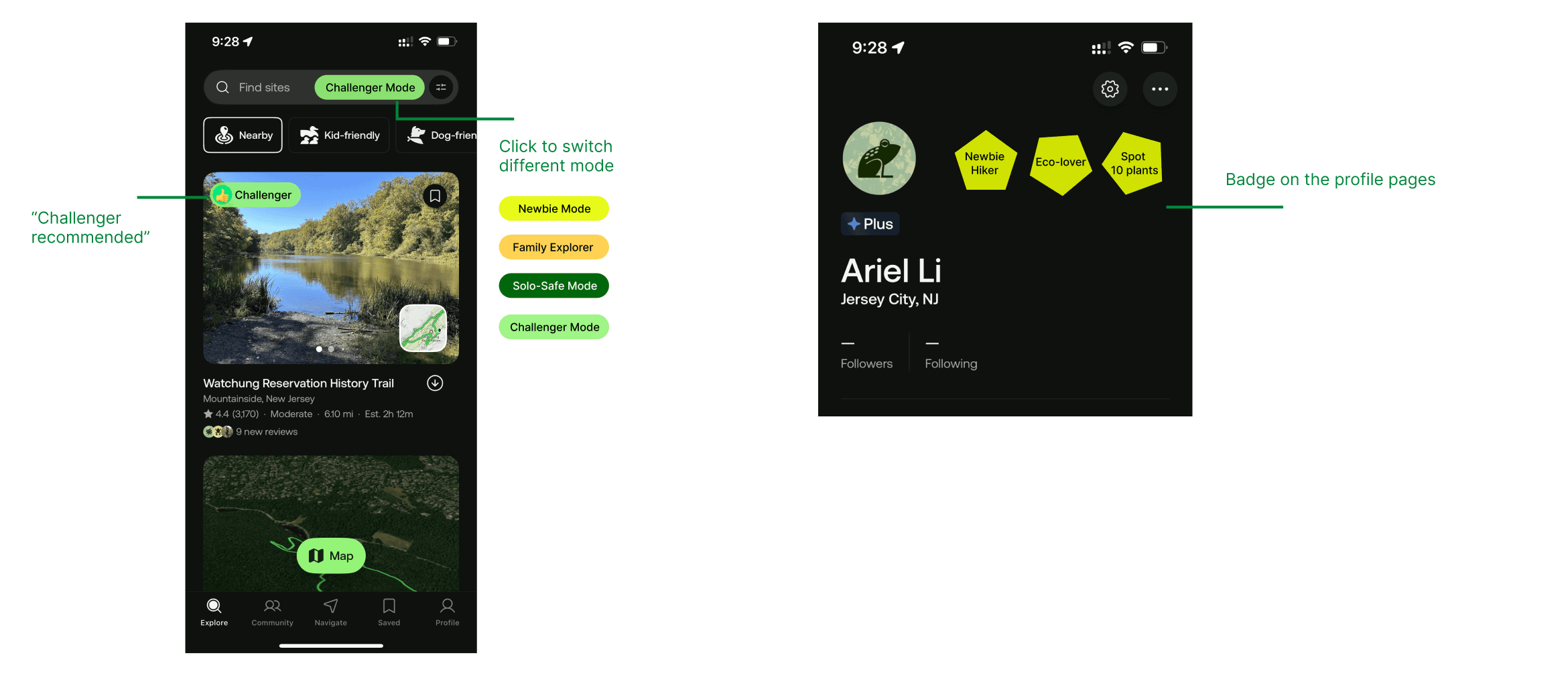
Archetype Modes
Newbie, Family, Solo-Safe, Challenger
Adjust tone, guidance, and reassurance based on emotional needs.
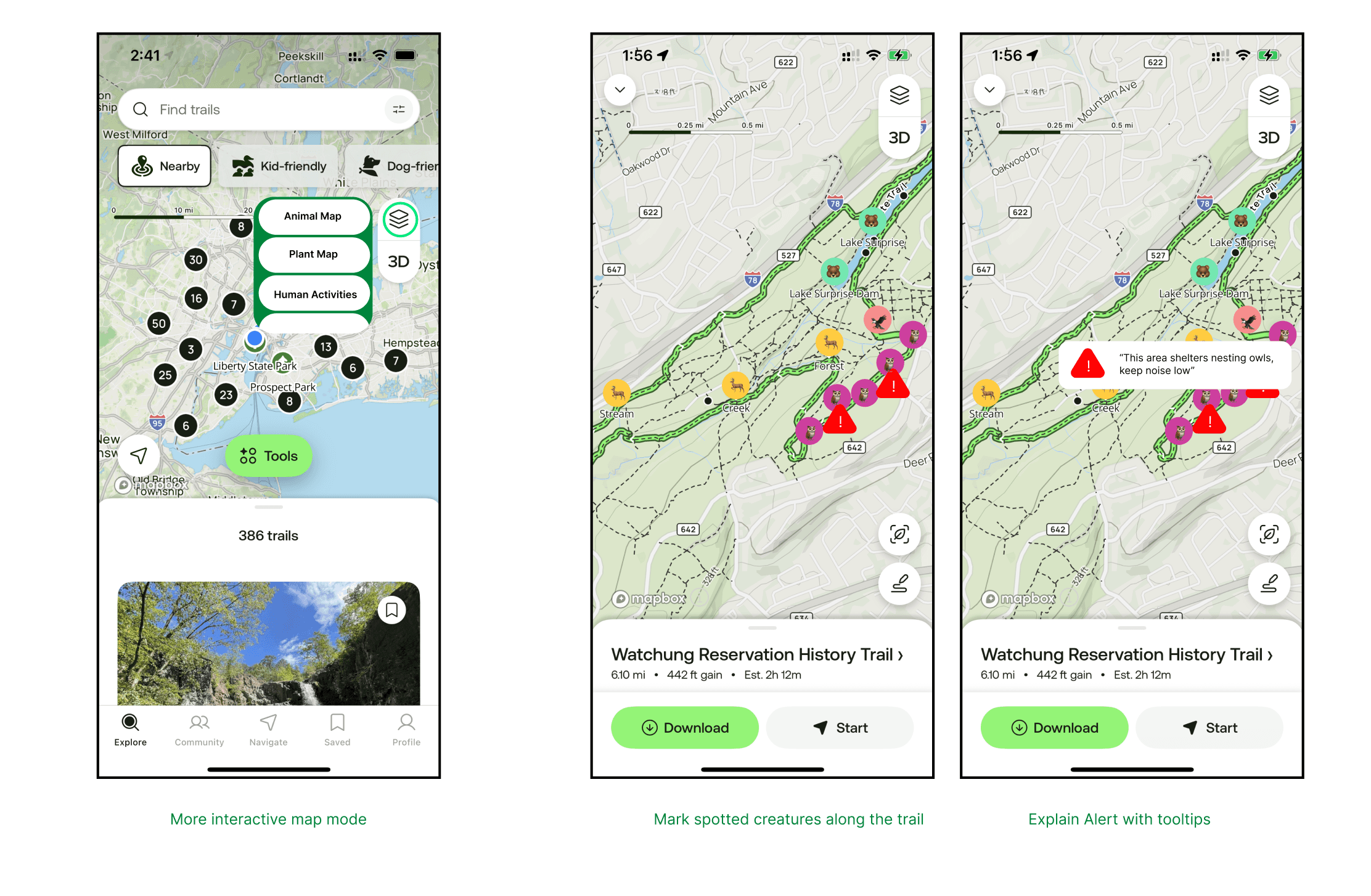
Contextual Ecology Layer
Embed ecological storytelling directly into maps:
Seasonal species, Wildlife alerts, Stewardship reminders
3. Curiosity Path
Extend Plant ID into a learning journey:
Personal ecosystem albums, Linked species stories, Local discovery loops
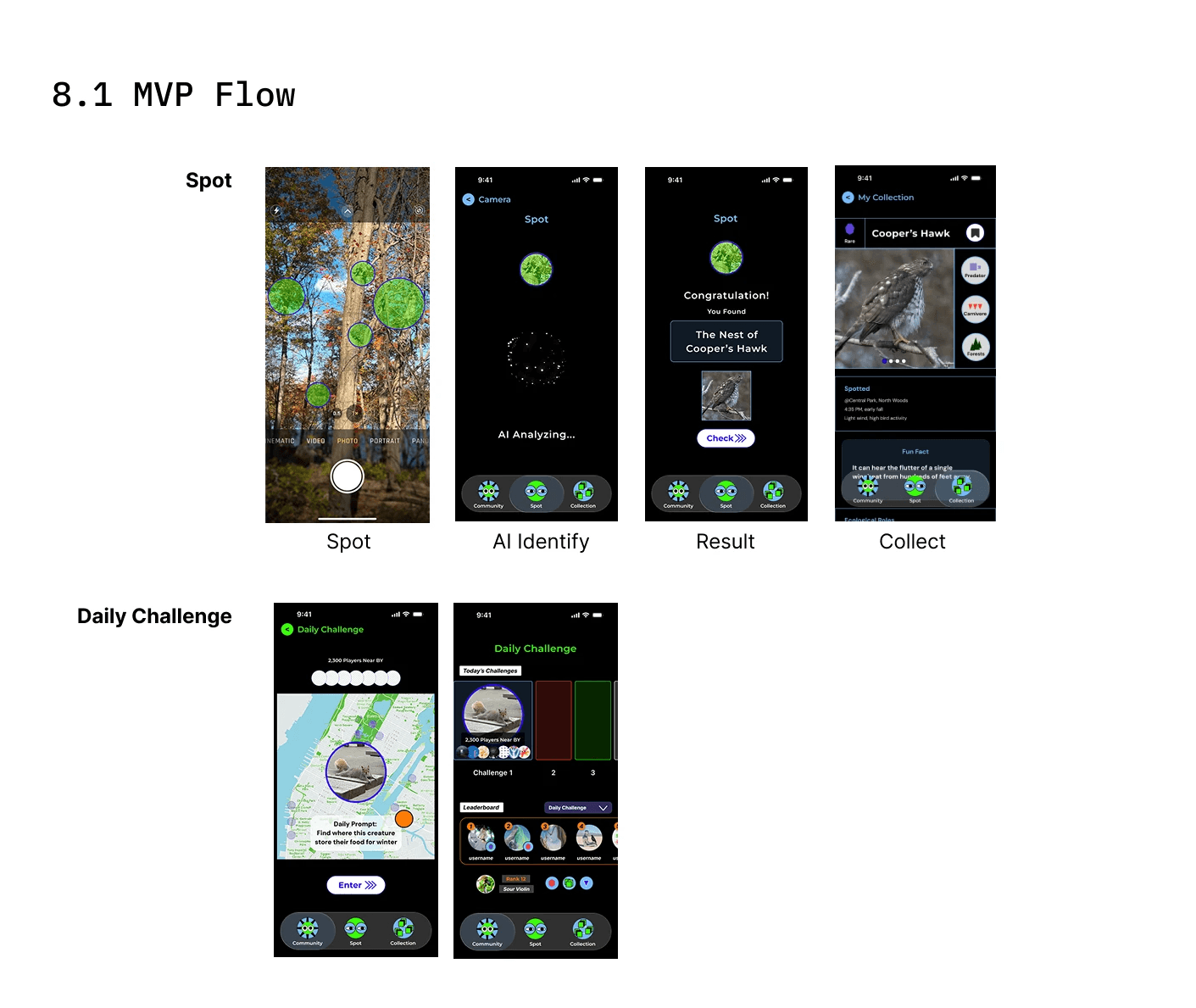
Check out my other project: Fantastic Creature an App inspired by the Plant ID feature
Community Loop
Turn reviews into dialogue:
Threaded conversations, Stewardship prompts, Recognition for care
Everyday Nature Interface
AllTrails already surfaces nearby trails and hidden gems. This proposal builds on that strength by adding temporal awareness.
Seasonal micro-encounters:
“Cherry blossoms are blooming nearby this week.”
“First crisp fall morning — perfect for a short walk.”
The goal: integrate nature into daily life, not just planned trips.
Outcome and Reflection
Was the project successful?
Yes. Not because it redesigned AllTrails, but because it reframed the role of digital tools in sustainability.
This project demonstrated that:
Awareness is a design outcome
Curiosity can be cultivated digitally
Sustainability can begin with perception
Designer Reflection:
As a designer, this project changed how I define impact.
Not through efficiency. Not through persuasion. But through invitation.
To notice. To be present. To care.
What I’d do next…
Test seasonal micro-encounters in real contexts
Prototype ecology layers with local parks
Explore how AI can support place-based learning rather than generic information
More Projects